










Breaking News
 Israel Vetoes Trump in the Middle East--Again
 Gen Z, the new 'Silent Generation,' swaps smartphones for dumb ones…
 How The World Views China Vs The US In 2026
 Can Sam Altman Be Trusted Inside Your Home? Meet OpenAI's New Always-On Smart Speaker
Top Tech News
 What could possibly go wrong? Scientists use AI to design new viruses
 Dual-motor suitcase drive underpins 3,000-hp hypercar
 DoorDash Wins Federal Approval To Fly Its Own Delivery Drones
 Shade-Resistant Solar Cells Retain 97% Efficiency After 2,000 Hours of Testing
 20 Ancient Engineering SECRETS
 Stonehenge Was Reanalyzed by AI -- And the Findings Are Hard to Explain
 After Years Of Delays, Aptera Is Finally Preparing To Build Customer Cars
 'When you kill it, it doesn't die': the jellyfish that has cracked the secret of immorta
 Archer Aviation debuts Halo autonomous VTOL, Thunder's commercial twin
 US Telecoms Slide On Starlink Mobile Threat; Bernstein Sees It As A "Jab, But No Knockout Yet**



Israel Vetoes Trump in the Middle East--Again
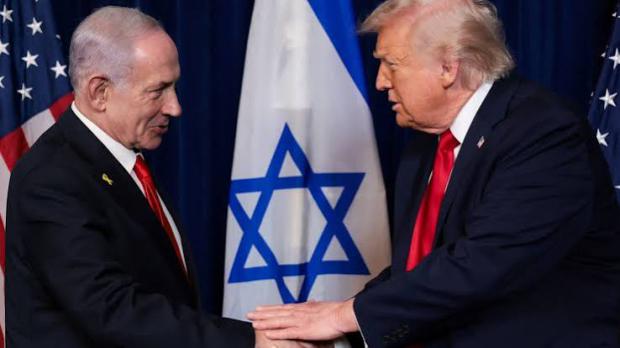
If not for Israel's veto power over U.S. foreign policy in the Middle East, the Trump administration might have secured peace in Gaza, stabilized relations with Iran, and clinched a deal with Saudi Arabia to help build a nuclear program for the kingdom.
OK, that last "opportunity" deserved a hard pass, unless you reckon nuclear proliferation in the world's most volatile region somehow serves U.S. interests. But in journalism, three makes a trend, so I've got myself a column.
And America has got itself a big problem: Israeli pushback on President Donald Trump's efforts to build a better Middle East shows how our most entangling of alliances undermines U.S. sovereignty.
The Gaza example is the most recent. Washington has enabled Israel's assault on Gaza, and Trump would now like to use his Board of Peace, which he oversees, to bring peace to the Palestinian enclave. That's quite the task, and Israel, an ostensible client state of the U.S., isn't making it any easier.
Last Thursday, Trump announced on social media that the Board had reached "a HISTORIC agreement for the COMPLETE DISARMAMENT of Hamas and all other armed groups in Gaza." Trump added, "As disarmament is completed, Israeli forces will withdraw."
Sorry, Mr. President, but you've been reading fake news.
"Contrary to inaccurate reports," the Board of Peace said in a statement this Monday, the Israeli military would withdraw forces only after Hamas handed over all its weapons.
That's not what Trump had said, and it's not what Hamas had understood the phased agreement to require. So, what happened? The Times of Israel reports:
The US-backed Board of Peace appeared to change its conditions for the IDF to withdraw from Gaza after its top officials held a meeting with Prime Minister Benjamin Netanyahu in Jerusalem on Monday, shortly before a fresh Israeli airstrike was reported in the enclave.
It's déjà vu all over again. In late July, the Trump administration announced an agreement to develop a Saudi civilian nuclear program. But there was a catch. The very next day, Trump clarified on Truth Social that the deal "is totally subject to Saudi Arabia joining the very respected and successful Abraham Accords."
By "Trump clarified," I mean that he retroactively decreed a new stipulation apparently designed to kill a deal opposed by Israel. The chances in the near future of Riyadh joining the Abraham Accords—which normalize relations between Muslim nations and Israel—are approximately, checking my math, consulting my copy of Introduction to Statistical Concepts: not gonna freakin' happen.
Again, the death of the U.S.–Saudi nuclear deal is a good thing, but it was brought about by a very bad thing, namely, Israel's de facto veto power over Trump's Middle East policy.
One Mideast nuclear agreement that actually would be good for American interests is the one with Iran that Trump was on the verge of securing in 2025. Early in his second term, Trump aimed to strike a deal that would deny Iran a pathway to the bomb. Statements by White House officials indicated Tehran could still be allowed to enrich uranium for civilian nuclear purposes.
But in spring 2025, something changed, and the Trump administration adopted the hardline position that Iran must commit to zero enrichment. That was a non-starter for Tehran, as the Islamic Republic had repeatedly declared.