










Breaking News
 The Economist Who Predicted 2008 Explains China's Endgame
 Charlie Kirk SNAPS at Anti White Masked ANTIFA
 Episode 488: THE FAUCI FIRESTORM
 Discussion with Glen Diesen
Top Tech News
 Shade-Resistant Solar Cells Retain 97% Efficiency After 2,000 Hours of Testing
 20 Ancient Engineering SECRETS
 Stonehenge Was Reanalyzed by AI -- And the Findings Are Hard to Explain
 After Years Of Delays, Aptera Is Finally Preparing To Build Customer Cars
 'When you kill it, it doesn't die': the jellyfish that has cracked the secret of immorta
 Archer Aviation debuts Halo autonomous VTOL, Thunder's commercial twin
 US Telecoms Slide On Starlink Mobile Threat; Bernstein Sees It As A "Jab, But No Knockout Yet**
 Betavolt unveils revolutionary coin-size battery with nickel-63 nuclear isotope...
 China claims it has built a 'nuclear drone' that can stay airborne forever
 Canada just solved two giant infrastructure problems at exactly the same time.



'When you kill it, it doesn't die': the jellyfish that has cracked the secret of immorta
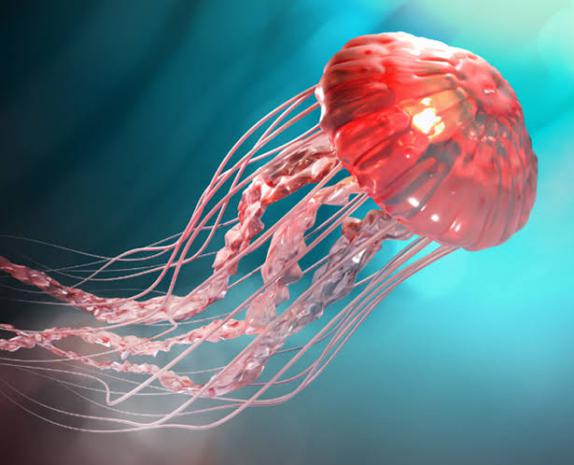
Immortality is generally considered the realm of the gods or science fiction, a fantasy that's actively pursued by tech entrepreneurs in macabre experiments that include injecting "young blood", cryopreservation, or resurrection in an AI afterlife.
But one ethereal, thimble-shaped jellyfish has already cracked the code.
As associate professor Maria Pia Miglietta, a marine biologist at A&M University in Texas, explains, Turritopsis dohrnii has an incredible ability to cheat death.
"Turritopsis is unique, because when faced with unfavourable conditions – and I mean high temperature, physical cutting, starvation, chemicals in the water, you name it – when you try to kill the jellyfish, it doesn't die."
Most normal jellyfish start off life as larvae. They metamorphose into polyps (tiny, stationary soft bodies) that bud off swimming medusas, which grow up to become adult jellies. Eventually, after reproducing, most will stop swimming, crumble a little and then die.
But the immortal jellyfish escapes that fate. It reverts to a juvenile form, and starts its life cycle again.
The process is called "cellular transdifferentiation", Miglietta says. The jellyfish looks like it's dying and sinks to the bottom. Then – like a butterfly returning to a caterpillar – it shrinks into a ball, and within 24 to 48 hours, buds off a new polyp with the same identical genome, she says.
It's one of "nature's coolest tricks", says Guardian reader Raquel López-Aragón. "When this jellyfish gets old or gets hurt, instead of just dying like most animals, it transforms itself back into a baby jellyfish and grows up all over again. It can do this as many times as it wants, which means theoretically it never has to die from getting old, it just keeps hitting the reset button on its life."
In the lab, where Miglietta studies them, these jellies can theoretically live for ever. However, for some in the wild, getting eaten may eventually end that dream run.
Globally, there are eight accepted species of Turritopsis – but (so far) only one holds the key to eternal life.
Immortal jellyfish are only a few millimetres in size. But, if you know what to look for, they can be found in many places, from the Mediterranean sea, to the Atlantic, from the coast of Japan to Panama and Brazil.
As another reader remarks, the immortal jellyfish does "exactly what it says on the tin". "They have the very enviable ability to simply turn back into a juvenile at any sign of stress, which is something that I'm sure we all wish extended to humans."
With their delicate bodies and veil of tentacles, Dr Lisa-ann Gershwin, a biologist specialising in jellyfish, describes Turritopsis as "exquisite" and "the most beautiful little creature". But what makes them remarkable is their capacity for reincarnation.