










Breaking News
 Exclusive – Sen. Ron Johnson Seeks 'Covid Reckoning':
 Iran's Pezeshkian Gets Red Carpet Treatment Alongside Putin, Xi, Modi & Erdogan...
 Politician Busted After FBI Finds $62,900 Buried In His Backyard
 Chinese Scientists Flagged Glacial Flood Danger One Year Before Nepal Catastrophe
Top Tech News
 Here's What to Expect as Air Taxis Actually Begin to Take Off
 'Wood Foam' Startup Uses Logging Waste as Substitute for Plastic, Producing 400 Pounds Daily
 How a Group of Young Men in 1933 Solved a Water Crisis in The Desert -- And Nobody Knows About It
 This American Battery Could Break China's Grip On The EV Supply Chain
 Tesla's Cybercab Launch Is Next Week. Here's What Tesla Still Needs To Prove
 800-passenger commercial plane boldly reinvents how we will fly
 Does Ultra-Fast Charging Ruin An EV Battery? BYD Did It 350 Times In 9 Days To Find Out
 Singapore is experimenting with biological computing using living human neurons...
 It's Happening - Europe is Building an Impossible Fusion Reactor
 Portable 1MW Kaleidos Microreactor Secures Critical Nuclear Fuel Deal Through 2030s



Chinese Scientists Flagged Glacial Flood Danger One Year Before Nepal Catastrophe
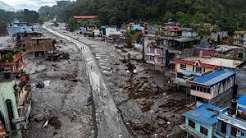
On August 26, a glacial-related collapse tore through Gyirong Port, one of the principal land crossings between Tibet and Nepal, destroying roads and bridges and leaving entire communities isolated and struggling to reach survivors. Villages and communities along the border have been left in ruins, with homes, roads, and infrastructure swept away.
At least 789 people have died, and more than 3,000 people are still missing.
More than a year ago, on July 8, 2025, a glacial lake outburst flood struck Gyirong County, in Shigatse, Tibet - the same area hit by the recent flash flood - destroying the Friendship Bridge on the China-Nepal border and leaving 17 people missing, according to the state-run Xinhua News Agency.
Chinese scientists at the State Key Laboratory of Geohazard Prevention and Geoenvironment Protection at Chengdu University of Technology published a study three days after the 2025 flood, warning that the area could experience another glacial lake outburst flood in the wake of the July 8 disaster.
They called for stronger upstream flood warnings and recommended conducting detailed assessments of the susceptibility and risks of all glacial lakes in the basin "as soon as possible" to support "post-disaster reconstruction and long-term stability."
A Warning Ignored
Drawing on their Qinghai-Tibet Plateau glacial lake database and risk assessments, these scientists identified 55 glacial lakes covering about 3.39 square kilometers [36 million square feet] in the watershed upstream basin of the Friendship Bridge.
Based on satellite imagery from July 8, the researchers determined that the flood was triggered by the outburst of a supraglacial lake upstream of the Purepu Zangbu River. The report found that the lake had also experienced an outburst in mid-July 2023.
According to the study, the lake began forming in 2018 and is a typical seasonal supraglacial lake rather than a permanent one.
Researchers said rising temperatures across the Qinghai-Tibet Plateau have intensified meltwater runoff and accelerated glacier melt, causing the lake to reach its largest recorded area.
Meltwater carrying large amounts of glacial debris may also have blocked subglacial drainage channels, preventing the lake from draining effectively. The water level eventually rose beyond historical extremes, triggering the July 8, 2025, outburst.