










Breaking News
 Where's the Beef?
 Five (Maybe Six) Things That Have Made New Cars Suck
 #677: All Along the Watchtower | John Sneisen
 Your government bought military-grade spyware and it can hear you breathing, watch your camera...
Top Tech News
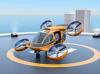 Here's What to Expect as Air Taxis Actually Begin to Take Off
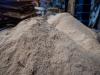 'Wood Foam' Startup Uses Logging Waste as Substitute for Plastic, Producing 400 Pounds Daily
 How a Group of Young Men in 1933 Solved a Water Crisis in The Desert -- And Nobody Knows About It
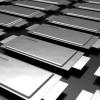 This American Battery Could Break China's Grip On The EV Supply Chain
 Tesla's Cybercab Launch Is Next Week. Here's What Tesla Still Needs To Prove
 800-passenger commercial plane boldly reinvents how we will fly
 Does Ultra-Fast Charging Ruin An EV Battery? BYD Did It 350 Times In 9 Days To Find Out
 Singapore is experimenting with biological computing using living human neurons...
 It's Happening - Europe is Building an Impossible Fusion Reactor
 Portable 1MW Kaleidos Microreactor Secures Critical Nuclear Fuel Deal Through 2030s



This American Battery Could Break China's Grip On The EV Supply Chain
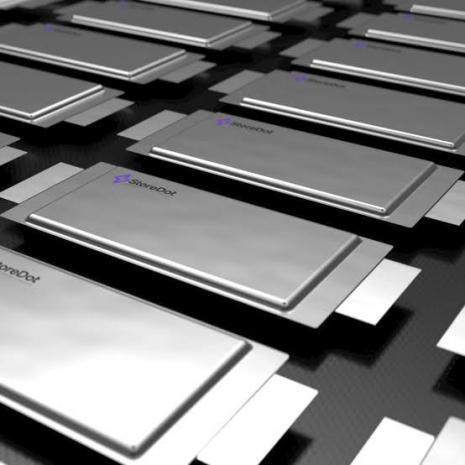
Chicago-based battery startup Pure Lithium is working on a potentially disruptive battery that it claims is cheaper and more energy dense than what's out there while relying on a North American supply chain. It's not solid-state, and it's not a silicon-anode battery. It's actually a lithium iron phosphate (LFP) battery without the graphite traditionally used in lithium-ion packs.
The startup claims to have achieved a breakthrough this past week, with its lithium-metal battery reaching 9,315 charge-discharge cycles. That is more than three times the cycle life of a conventional lithium-ion battery, and Pure Lithium said it's unprecedented: "To the Company's knowledge, no other lithium metal battery in development has achieved such results under equivalent testing conditions."
The vast majority of today's lithium-ion batteries depend heavily on Chinese supply chains. Now, there's a push in North America not only to break that dependence, but also to advance lithium-ion technology so electric vehicles can drive farther, charge faster and last longer. Pure Lithium says it has eliminated the graphite anode, which is expensive and dirty to mine.
"It's half the weight and double the energy density of the battery that we're all using today," CEO Emilie Bodoin said in a Bloomberg interview. A major reason for that, she argues, is getting rid of graphite. The battery isn't on the market just yet, though; Pure Lithium is building a pilot line in Chicago and looking for partners to help it commercialize its tech, Bodoin said.
More than 90% of the world's graphite is processed in China. Graphite also adds weight and takes up valuable space inside a battery cell. It does not actively participate in the battery's electrochemical reaction. Instead, it primarily acts as a host material that allows lithium ions to be stored and released during charging and discharging, according to the startup. Pure Lithium's argument is to get rid of the graphite, free up space inside the cell, and use that space for more usable energy material.
For the cathode, Pure Lithium is using LFP chemistry, which itself has historically been heavily dependent on Chinese supply chains but is now slowly becoming more localized in the U.S. That means its lithium metal LFP battery eliminates the need for several expensive and dirty materials, including nickel, manganese, cobalt, and graphite. While nickel-rich chemistries certainly offer higher energy density than LFP, Pure Lithium says it can make up for that difference by freeing up space on the anode side of the cell and eliminating graphite.
The 9,000-plus cycles it achieved in the laboratory were performed at 1C charge and discharge rates. In simple terms, that means the battery was fully charged for one hour and then fully discharged for one hour, repeatedly, for more than 9,000 cycles. That's actually very tough on the cell and tests its limits. In real world use, batteries are rarely stress tested to such extremes.