










Breaking News
 Where's the Beef?
 Five (Maybe Six) Things That Have Made New Cars Suck
 #677: All Along the Watchtower | John Sneisen
 Your government bought military-grade spyware and it can hear you breathing, watch your camera...
Top Tech News
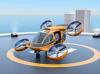 Here's What to Expect as Air Taxis Actually Begin to Take Off
 'Wood Foam' Startup Uses Logging Waste as Substitute for Plastic, Producing 400 Pounds Daily
 How a Group of Young Men in 1933 Solved a Water Crisis in The Desert -- And Nobody Knows About It
 This American Battery Could Break China's Grip On The EV Supply Chain
 Tesla's Cybercab Launch Is Next Week. Here's What Tesla Still Needs To Prove
 800-passenger commercial plane boldly reinvents how we will fly
 Does Ultra-Fast Charging Ruin An EV Battery? BYD Did It 350 Times In 9 Days To Find Out
 Singapore is experimenting with biological computing using living human neurons...
 It's Happening - Europe is Building an Impossible Fusion Reactor
 Portable 1MW Kaleidos Microreactor Secures Critical Nuclear Fuel Deal Through 2030s



Here's What to Expect as Air Taxis Actually Begin to Take Off
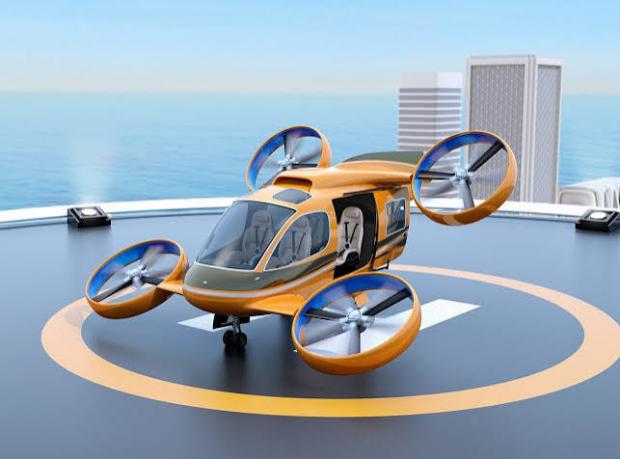
Following a slew of promises, taxis are finally preparing to carry passengers. But don't expect a Blade Runner skyline anytime soon. The first limited commercial services could start this year, most likely with California-based Joby Aviation, though it remains unclear whether the debut will come in Dubai or the U.S. Either location will mark a milestone for urban air mobility—but the revolution will unfold one carefully certified flight at a time.
In 2016, Uber Elevate published a white paper outlining a future of urban air mobility (U.A.M.) built around zero-emission, low-noise electric vertical takeoff and landing (eVTOL) aircraft. These scaled-up drones promised inexpensive air-taxi service that could sail above traffic, and a design boom followed. Two years ago, 1,200-plus eVTOL proposals had been documented by evtol.news, many predicting they'd be flying passengers by 2025 or 2026.
So where are they?
Most never made it past the press-release phase. Others raised money, burned through it, and disappeared. Even Uber exited the business, selling Elevate to Joby. Today, Joby, Archer, Wisk, Eve, Beta Technologies, and Vertical Aerospace are the leading contenders in the U.S. and Europe. "People will see them, at least the ones that are that far advanced, flying in different places around the country within the year," says Mike Hirschberg, a veteran aviation consultant who previously ran the Vertical Flight Society, which helped promote the largely aspirational eVTOL world about 15 years ago.
The sector's recent increased visibility is largely due to the eVTOL Integration Pilot Program (eIPP), created by a presidential executive order in June 2025 to accelerate the safe deployment of advanced air mobility vehicles. The program allows companies with working aircraft to conduct demonstration flights at participating sites before gaining final F.A.A. type certification.
"I think you'll see more momentum building as we drive toward carrying passengers and starting to really exercise these aircraft under the eIPP," says Eric Allison, Joby's chief product officer. "We're embracing that opportunity. I think it'll help people understand how these aircraft work [in practice], which then also helps all the other work that has to happen for type certification to play out even faster."
For travelers, the city-based air-taxi model has emerged as the leading use case over longer-distance regional travel. "We're looking at what problem the eVTOL solves," says Megha Bhatia, Eve's chief commercial officer. "It's being able to carry out the last-mile mission or short urban hops." Initially, that will mean flights lasting just minutes—from an airport to a heliport or purpose-built vertiport on a city's edge. Think JFK to Midtown Manhattan, MIA to downtown Miami, LAX to Malibu, or a quick arrival at the Masters, the Kentucky Derby, or a Formula 1 race.