










Breaking News
 Where's the Beef?
 Five (Maybe Six) Things That Have Made New Cars Suck
 #677: All Along the Watchtower | John Sneisen
 Your government bought military-grade spyware and it can hear you breathing, watch your camera...
Top Tech News
 Here's What to Expect as Air Taxis Actually Begin to Take Off
 'Wood Foam' Startup Uses Logging Waste as Substitute for Plastic, Producing 400 Pounds Daily
 How a Group of Young Men in 1933 Solved a Water Crisis in The Desert -- And Nobody Knows About It
 This American Battery Could Break China's Grip On The EV Supply Chain
 Tesla's Cybercab Launch Is Next Week. Here's What Tesla Still Needs To Prove
 800-passenger commercial plane boldly reinvents how we will fly
 Does Ultra-Fast Charging Ruin An EV Battery? BYD Did It 350 Times In 9 Days To Find Out
 Singapore is experimenting with biological computing using living human neurons...
 It's Happening - Europe is Building an Impossible Fusion Reactor
 Portable 1MW Kaleidos Microreactor Secures Critical Nuclear Fuel Deal Through 2030s



'Wood Foam' Startup Uses Logging Waste as Substitute for Plastic, Producing 400 Pounds Daily
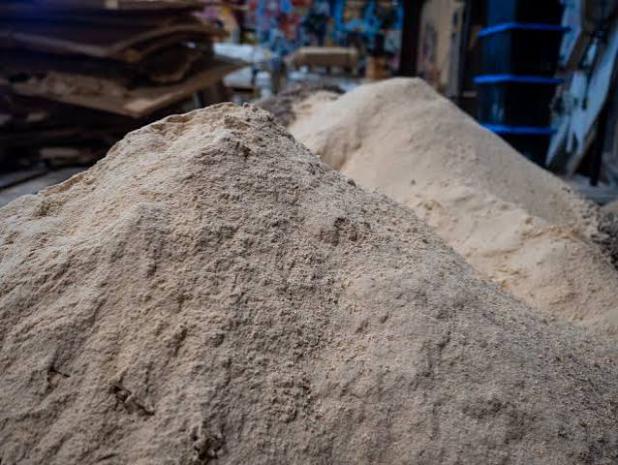
With one of the largest timber industries in the world, the innovation clears two hurdles in one leap: cutting back on polluting, long-lived plastics, and utilizing a waste product from an already existing industry.
Already, a pilot plant in East Vancouver is producing around 400 pounds of the so-called wood foam every day.
Among plastics, polystyrene foam is arguably the most environmentally problematic. Anyone who's pulled a TV or coffee machine from a box filled up with the stuff will know how readily it shreds into microplastics, but what they usually don't know is that scientists estimate it requires twice as long to breakdown as other commonly used plastics—remaining in the environment for around 1,000 years.
Speaking of remaining in the environment, at every stage of the logging supply chain, wood material is wasted. In the forest, sawdust, chips, and pulp accumulates on the forest floor and can like as a quick-burning accelerant for forest fires. On the sawmill floor, meanwhile, this residue has to constantly be gathered up and disposed of.
Substituting one for the other was obvious for the UBC team which developed the wood foam, led by Professor Feng Jiang, and the company which spun it out into a business called DicinFoam, led by CEO Richard Chen and CTO Zhu Yale.
"We've made it from low-value pulp, wood fibers, and forestry residues," Zhu told CBC News. "What we're trying to do is we want to extract the majority of the value out of it and make it into our day-to-day packaging needs."
The mixed-media material is homogenized before being fed into a special machine that forms the foam panels and heat presses them. The company has plans to scale up to a 1,000 tons-per-year operation on the shores of Burns Lake on the territory of the Wet'suwet'en First Nation who own the company.
"Every tree that gets harvested, 30% of the tree doesn't get utilized," CEO Chen said. "If we can even get a fraction of that and replace everyday existing products that are made of plastics … I feel that's a big deal—especially when we have materials just sitting in the forest."
If the 1,000-ton plant is a success, DicinFoam imagines a 15,000 ton-per-year plant on Vancouver Island. At this scale, the team says, the end product will be cost-competitive with the polystyrene foam they hope to replace.