










Breaking News
 Where's the Beef?
 Five (Maybe Six) Things That Have Made New Cars Suck
 #677: All Along the Watchtower | John Sneisen
 Your government bought military-grade spyware and it can hear you breathing, watch your camera...
Top Tech News
 Here's What to Expect as Air Taxis Actually Begin to Take Off
 'Wood Foam' Startup Uses Logging Waste as Substitute for Plastic, Producing 400 Pounds Daily
 How a Group of Young Men in 1933 Solved a Water Crisis in The Desert -- And Nobody Knows About It
 This American Battery Could Break China's Grip On The EV Supply Chain
 Tesla's Cybercab Launch Is Next Week. Here's What Tesla Still Needs To Prove
 800-passenger commercial plane boldly reinvents how we will fly
 Does Ultra-Fast Charging Ruin An EV Battery? BYD Did It 350 Times In 9 Days To Find Out
 Singapore is experimenting with biological computing using living human neurons...
 It's Happening - Europe is Building an Impossible Fusion Reactor
 Portable 1MW Kaleidos Microreactor Secures Critical Nuclear Fuel Deal Through 2030s



Iceland Voters Reject Reopening Talks To Join European Union
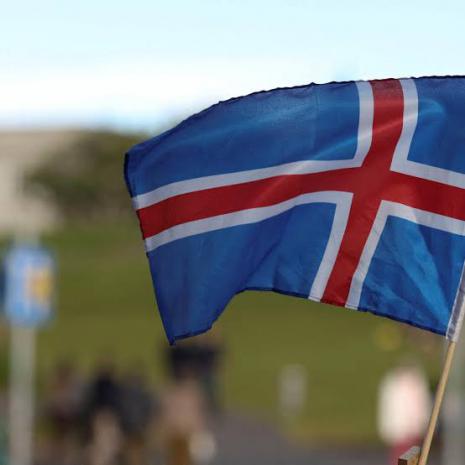
Heading into the vote, the "yes" camp was ahead by just 2.6 points - however opponents defeated the measure by a margin of 52.8% to 47.2%, according to RUV.
A "yes" vote would have sent the government back to Brussels - while any deal would have required a second referendum and ratification by all 27 member states. Now, the issue is shelved and moot.
Before the 'no' vote, Social Democrat Prime Minister Kristrún Frostadóttir described the vote as "an opportunity."
Opponents suggested this was nothing more than deception - with the government trying to convince people "that we are not really applying, that we are merely looking into what membership would entail," Gudlaugur Thor Thordarson, a former foreign minister and current lawmaker for the opposition Independence Party, said in an interview with The Epoch Times. "If you apply to join the EU, you are applying to join the EU."
Membership, he said, would mean EU law overriding Icelandic law, a sweeping transfer of legislative and executive power, and the jurisdiction of the EU's courts on top.
Haraldur Ólafsson, a physics professor who chairs the eurosceptic movement Heimssýn, told The Epoch Times the question was worded so that people "find it very difficult to say no to discussions."
Applying without wanting to join, he added, makes "a fool of the European Union." "You should try to win over the people of the country before you submit an application, instead of submitting one in camouflage," he said.
As the Epoch Times notes further, Iceland applied to join the EU in July 2009, months after its banks collapsed. Talks opened in 2010, and 11 of 35 policy chapters had been provisionally closed by the time a new center-right government froze the process in 2013. The fisheries chapter, the most sensitive of all, was never opened.
In March 2015, Reykjavík asked Brussels to no longer regard it as a candidate country.
The current government contends that the application nonetheless remains valid, a view the European Commission has endorsed. Thordarson disputes this. The "still valid" line, he said, was the product of government lobbying in Brussels and "came as a total surprise to all of us."
He also said that visits by European ministers to Reykjavík over the summer to urge a "yes" amount to "foreign interference."
Spanish Foreign Minister José Manuel Albares and his Austrian counterpart, Beate Meinl-Reisinger, both spoke favorably of Icelandic membership during visits to the country in June, with the referendum on the agenda.
France's Jean-Noël Barrot struck a similar note during an official visit in July, saying Iceland "had nothing to lose" by reopening talks.
The Greenland Factor
The government's own explanation for the timing points not to Brussels but to Washington. Frostadóttir's center-left coalition, formed after the late-2024 election, had pledged a referendum by 2027. In March it brought the vote forward, weeks after U.S. President Donald Trump renewed his push to acquire Greenland, which he said has become a national security concern for the United States because of increasing Russian and Chinese influence over the Arctic.
Foreign Minister Thorgerdur Katrín Gunnarsdóttir said it would be "both naive and irresponsible" not to take the moment in history into account.
Snærós Sindradóttir Bachmann, executive director of the European Movement in Iceland, told The Epoch Times that the vote is "about human rights and democracy, and about standing with like-minded nations against this threat from the West," a reference to Washington's pressure on Greenland.