










Breaking News
 Forgotten Amish Survival Bar: 500 Calories, No Fridge, 1930s Recipe
 Solid State Marine Batteries: False Advertising?! Fire Risk?
 Political Realities May Force the Fed to Hike in September
 The Fallacy of Stable Prices
Top Tech News
 Here's What to Expect as Air Taxis Actually Begin to Take Off
 'Wood Foam' Startup Uses Logging Waste as Substitute for Plastic, Producing 400 Pounds Daily
 How a Group of Young Men in 1933 Solved a Water Crisis in The Desert -- And Nobody Knows About It
 This American Battery Could Break China's Grip On The EV Supply Chain
 Tesla's Cybercab Launch Is Next Week. Here's What Tesla Still Needs To Prove
 800-passenger commercial plane boldly reinvents how we will fly
 Does Ultra-Fast Charging Ruin An EV Battery? BYD Did It 350 Times In 9 Days To Find Out
 Singapore is experimenting with biological computing using living human neurons...
 It's Happening - Europe is Building an Impossible Fusion Reactor
 Portable 1MW Kaleidos Microreactor Secures Critical Nuclear Fuel Deal Through 2030s



Five (Maybe Six) Things That Have Made New Cars Suck

There are cars that have less power than others, but nothing new is "underpowered" in the way many cars were back in the '70s and '80s and even into the '90s (Geo Metro, anyone?) and bodies usually don't show rust at least until the loan is paid off and there's no longer such a thing as an "economy" car, either – because today's entry level cars all come standard with AC, power everything, an at least decent stereo and so on.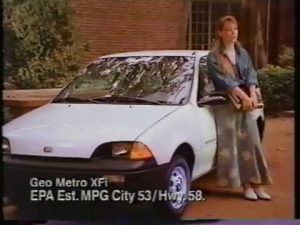
New cars just suck differently. Here are some of the ways they do:
They are hard to see out of –
One of the great virtues of the cars of the past was that they were easy to see out of, because they had lots of glass and thin A, B and C pillars holding up their roofs. A quick glance to the left – or the right – assured there was no one coming from that direction and you could just pull out from a sidestreet onto the main road. In most new cars, this is often fraught with peril – as they say in bodice-ripping romance novels – because the A, B and C pillars are as thick as the structural girders of a small bridge. That's because – per federal "safety" decree – they have to be able to support the weight of the car if it rolls on its roof. Of course, it is more likely to roll on its roof because it got hit hard from the left or right because its driver pulled out in front of someone he couldn't see coming on account of those massive A, B and C pillars.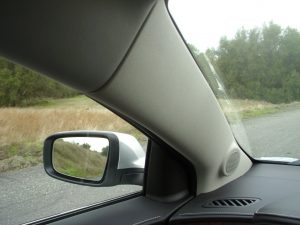
Their gas mileage sucks –
Back when there were still economy (rather than entry level) cars, they were lots of inexpensive cars that got better mileage (50-plus MPG) than any new car available today that isn't an expensive hybrid, such as the Prius. This was the major upside to being underpowered; you maybe didn't pass many other cars – but you did pass lots of gas pumps. Today, even with efficiency advantages that were not yet even gleams in an engineer's eyes, such as direct injection, variable valve/cam timing and (of course) transmissions with more overdrive gears than most automatic transmissions had gears, period – 35-40 MPG is considered outstanding for a non-hybrid and nothing that isn't a hybrid gets to 50, let alone exceeds it. The reason why is because all that technology is counteracted by weight – most of which has been added by government regs. There's not a single new car that weighs less than 2,000 pounds and most weigh well over 3,000. If new cars weighed what the sucky cars of the '70s and '80s and '90s weighed, they'd probably get 60 MPG without needing a hybrid drivetrain to achieve it.