










Breaking News
 Exclusive – Sen. Ron Johnson Seeks 'Covid Reckoning':
 Iran's Pezeshkian Gets Red Carpet Treatment Alongside Putin, Xi, Modi & Erdogan...
 Politician Busted After FBI Finds $62,900 Buried In His Backyard
 Chinese Scientists Flagged Glacial Flood Danger One Year Before Nepal Catastrophe
Top Tech News
 Here's What to Expect as Air Taxis Actually Begin to Take Off
 'Wood Foam' Startup Uses Logging Waste as Substitute for Plastic, Producing 400 Pounds Daily
 How a Group of Young Men in 1933 Solved a Water Crisis in The Desert -- And Nobody Knows About It
 This American Battery Could Break China's Grip On The EV Supply Chain
 Tesla's Cybercab Launch Is Next Week. Here's What Tesla Still Needs To Prove
 800-passenger commercial plane boldly reinvents how we will fly
 Does Ultra-Fast Charging Ruin An EV Battery? BYD Did It 350 Times In 9 Days To Find Out
 Singapore is experimenting with biological computing using living human neurons...
 It's Happening - Europe is Building an Impossible Fusion Reactor
 Portable 1MW Kaleidos Microreactor Secures Critical Nuclear Fuel Deal Through 2030s



How to Make Homemade Artisanal Jam Without Pectin
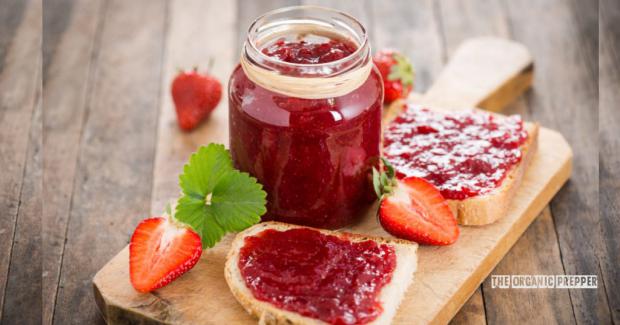
Why You Might Want to Make Your Jam WITHOUT Pectin
As the name of this website implies, we like to keep things nourishing and natural. A while back, I spent some time reading up on store-bought pectin and I was very unhappy to discover the jams I had been making for my family have been tainted with GMOs. I had unknowingly been contaminating the carefully sourced fruit and pricey turbinado sugar with the very things I strive to avoid, and I hadn't even given it a second thought.
Most brands exclaim breathlessly, "All natural pectin" or "Made from real fruit". And this is true – it does originate from fruit. Sound okay, right? Don't be deceived. This misleading label makes it sound as though this is nothing more than some powdered fruit.
Storebought pectin contains additives that are most likely genetically modified. Dextrose is generally made from corn products (GMOs that are absolutely SOAKED in glyphosate). It is made from cornstarch, the main ingredient in good old High Fructose Corn Syrup.
Don't let anyone tell you that citric acid is "just Vitamin C". It is derived from GMO black mold.
Not only does store-bought pectin contain unsavory ingredients, but it is also very highly processed. According to Wikipedia, this is how it is produced:
The main raw materials for pectin production are dried citrus peel or apple pomace, both by-products of juice production. Pomace from sugar beet is also used to a small extent.
From these materials, pectin is extracted by adding hot dilute acid at pH-values from 1.5 – 3.5. During several hours of extraction, the protopectin loses some of its branching and chain length and goes into solution. After filtering, the extract is concentrated in vacuum and the pectin then precipitated by adding ethanol or isopropanol. An old technique of precipitating pectin with aluminium salts is no longer used (apart from alcohols and polyvalent cations, pectin also precipitates with proteins and detergents).