










Breaking News
 Inventor's Microfiber Laundry Filter Is Already Keeping Tons of Fossil-Fuel Fibers Out...
 DHS Docs: Govt Bracing For Nationwide Anti-AI Riots, Preparing To Crack Down On Dissent
 Governments Are Coming for Your Retirement Savings
 JUST IN: Trump Blasts Iran's "Weak and Pathetic" Claims About Deal, Warns Iran Against
Top Tech News
 NUCLEAR ENGINE - UNLIMITED LUXURY - 20 YEARS WITHOUT REFUELING
 China Unveils Nuclear-Powered Floating Hub For Green Shipping
 China Launches World's 1st Commercial Brain Chip, Beating Elon Musk's Neuralink!
 Modular next-gen US nuclear reactor goes critical
 How EMF's cause disease
 This Company Will Add Phone, AirPod, and Smartwatch Trackers to License Plate Readers
 Elon Details SpaceX AI Data Center in Space Details and Roadmap
 5-in-1 miniature surgical robot is the size of a seed
 Every hard drive you own will die.
 Flying car industry turns to solid-state batteries for commercial takeoff



Inventor's Microfiber Laundry Filter Is Already Keeping Tons of Fossil-Fuel Fibers Out...
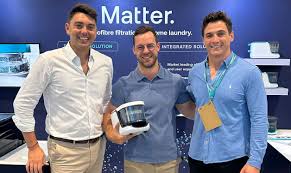
An English inventor has partnered with home appliance giant Bosch to produce a laundry machine filter for artificial microfibers, the world's most significant source of microplastic pollution.
You've got to be a bit eco-conscious to fork over the $250 or so to buy the food-processor sized device that hooks right up to a home washing machine, but the home market is just one direction that inventor Adam Root is pursuing.
Microplastic pollution may be the world's largest public health threat. The tiny fragments are found everywhere in the world a scientist has cared to look, including in every human organ and tissue, from the brain to the placenta.
Scientists aren't aware of all their potential health consequences, but research has concretely demonstrated that microplastics dysregulate hormones at least, and are linked to a variety of other conditions including stunted growth, reduced fertility, and stomach, kidney, and liver problems.
Many people will equate the plastic bottle floating in the sea to the pollution, but the largest source are microfibers and come from two sources: artificial clothing and textiles, and tire tread wear.
Root says that every load of home laundry will ultimately shed about 1 gram of tiny fossil fuel-based thread filaments, and that these are typically washed out of the machine and into the sewage system, to join rivers and eventually the sea.
That's why Root is working to pioneer his easy-to-install, self-cleaning, and filterless device at scale to textile plants and industrial washing operations.
"The most common thing we hear is: 'I cannot believe how much material is coming out of the washing machine,'" Root told the Guardian. "Somebody sent me [photos of] dinner-platefuls."
Additional benefits is the filtering out of normal fabric fibers that are chock full of synthetic dyes and other chemicals that do our biology no favors either.
Root and his company Matter Industries which makes the filter device aren't waiting around for the citizens of the world to all miraculously find $250 to spend on something that will have no measurable effect on the benefit of their lives, and is instead going right to the source: to the factories that make artificial textiles.