










Breaking News
 'UNFAIR': Mamdani's city-run grocer plan SLAPPED with lawsuit
 Trump Says If Iran Had a Nuclear Weapon, He Would Have Politely Called the Supreme Leader...
 Tucker Carlson: We are on the brink of a world war that ends with the use of nuclear weapons
 Who is trying to destroy the United States and the world?
Top Tech News
 Freezable titanium plate keeps your cooler chilled way longer than ice packs
 Review: Affordable thermal device is made for discovering life outdoors
 AI Whistleblower Tells Tucker How AI Could Kill All Humans by 2040
 You Hate Flock? Well There's More...
 Will Spiking Diesel Prices Drive Autonomous Trucking?
 Chinese Concept Video Imagines the Future of Warfare
 OPTIMUS CONFIRMED: 15,000 Bots This Year -- Tesla to $3,000
 What is Going On With Robotaxi and Cybercab? Here Are All the Answers
 Floating data center would provide water and electricity to 32,000 homes
 OpenAI Cuts Off Elon's Cursor, Humanity's First Star Probe, and Trump's Nuclear Mars Shi



Flying car industry turns to solid-state batteries for commercial takeoff
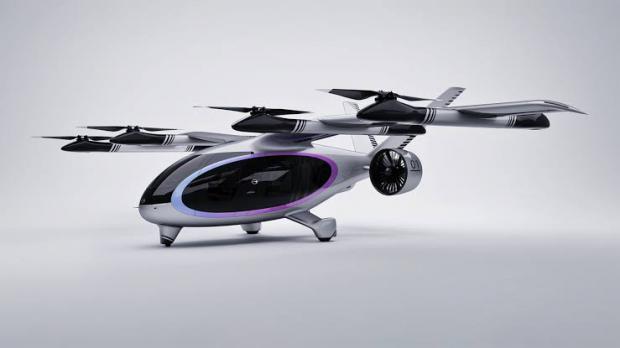
As the flying car industry moves from prototype development toward commercial deployment, attention is increasingly shifting to the technologies needed to support safe and scalable operations.
Su Qingpeng, founder and CEO of GAC Govy, a low-altitude mobility company incubated by GAC, recently described solid-state batteries as the "essential path" for the future of flying cars, highlighting their potential to deliver the energy density and safety required for aerial mobility.
At the same time, investor expectations are evolving. Rather than focusing primarily on technical specifications and performance claims, capital markets are placing greater emphasis on practical indicators of commercial success, including vehicle deliveries, profitability, production readiness, and the timeline for obtaining airworthiness certification.