










Breaking News
 IS WASHINGTON "TRIGGERING" THE NEXT MEAT CRISIS?!
 How to Fix Your Heavy Clay Soil (Garden Hacks That Actually Work )
 As Bibi Comes Back To DC, Trump's Out Of Options For Iran
 BOMBSHELL: Investigative Reporter Claims Dozens of American Journalists Are on China's Payroll
Top Tech News
 Elon Vows AI-Made 'Odyssey' After Blasting Nolan's Take On Homer
 Anthropic is launching its own drug discovery programs for rare diseases using Claude...
 SpaceX AI Satellites Will Have 250 Kilowatts of Power
 Chinese researchers have developed a sodium-metal battery that can fully charge in just 4 minutes...
 SpaceX Starship Flight 13 in 3 Days - Thursday July 13
 Chinese Scientists Develop Nuclear Battery Using Carbon-14
 Teleoperated humanoid robots complete first-ever live surgery
 Floating capsule auto-disinfects water without chemicals or battery
 Modular Reactors To Solve Data Center Hysteria?
 DeepSeek Developing In-House AI Chip In Bid To Cut Nvidia Reliance



China Unveils Nuclear-Powered Floating Hub For Green Shipping
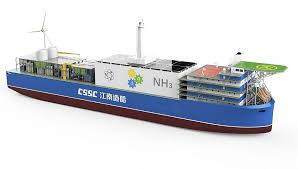
The concept, unveiled by Jiangnan Shipyard, combines port infrastructure, energy generation, and cargo handling into a single floating facility aimed at reducing emissions in maritime transport.
The project was presented at the Posidonia International Shipping Exhibition in Greece.
The SCMP writes that the platform would rely on a molten salt reactor as its primary energy source, supplemented by renewable technologies including solar and wind power. It would also feature systems for hydrogen production, synthetic green fuels, and electricity distribution. According to the company, the facility could generate clean power and fuels such as ammonia for both terminal operations and electric support vessels.
Jiangnan argues that molten salt reactor technology offers significant safety benefits because it is resistant to conventional meltdown scenarios and the coolant solidifies quickly if released, limiting the potential impact of leaks.
Designed to support international shipping lanes, coastal transport links, and cargo transshipment, the floating hub could also be replicated at other strategic ports thanks to its modular design.
The proposal builds on Jiangnan's ongoing work in nuclear-powered shipping. In 2024, the company revealed plans for a large container vessel powered by a thorium-based molten salt reactor. Meanwhile, Chinese scientists have continued advancing the technology, recently demonstrating a successful conversion of thorium into uranium fuel within a molten salt reactor system. Thorium is widely viewed as a more abundant alternative to conventional uranium fuel.