










Breaking News
 Questions Are Piling Up Fast As Pratt Suddenly Loses Second Place In LA Mayoral Vote
 Alex Jones Live: Treasonous NDAA Section Handing Israel The Keys To US Military Technologies...
 Oil Jumps After Israel Strikes Military Targets In Iran, Ignoring Trump Pleas Not To "Strike Ba
 Poll Finds Strong Support For Larger Families Despite Falling US Birth Rates
Top Tech News
 World's longest-range airliner takes to the skies
 Batteries That Use Sodium Instead of Lithium Could Be Low-Cost Rival to Tesla's
 Elon and SpaceX Have Made AI Training 10 Times Faster
 Oklo COO Says Nuclear Waste Could Power America For 150 Years
 SpaceX Announces LARGEST Starship Mission Ever! They've never done this before!
 Cars Are Fast Becoming Dystopian Prison Pods...
 Our Emergency Water Plan Wasn't Good Enough - So We Built This
 Sodium Ion Batteries Can Reach 100 Gigawatt Per Hour Per Year Scale in 2027
 Juiced Bikes proves capable electric motorcycles don't have to cost a lot
 Headlight projectors turn your car into a drive-in theater


The Ogallala Aquifer Is Dying - As The Largest Supply Of Groundwater In The United States Vanishes,
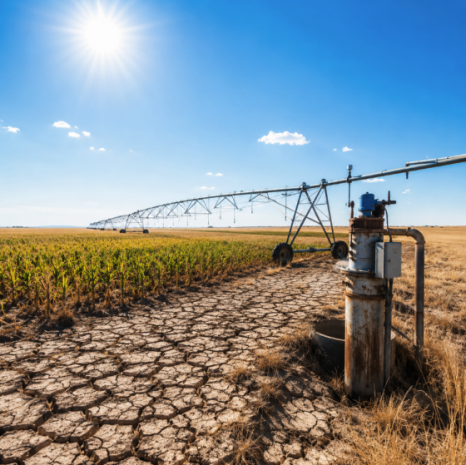
Gigantic underground aquifers are being rapidly depleted all over the world, and once that water is gone it will take a very long time for it to come back. In fact, in some areas of the United States the recharge rate is less than an inch per year. That is a major problem, because more than half of the water that U.S. farmers use for irrigation comes from underground aquifers. What in the world are our farmers going to do once that water is gone?
The largest underground aquifer in the United States is known as the Ogallala Aquifer. It covers a vast area under portions of eight different states, and it accounts for approximately 30 percent of all groundwater that is used for irrigation in our nation…
The Ogallala Aquifer (oh-g?-LAH-l?) is a shallow water table aquifer surrounded by sand, silt, clay, and gravel located beneath the Great Plains in the United States.
As one of the world's largest aquifers, it underlies an area of approximately 174,000 sq mi (450,000 km2) in portions of eight states (South Dakota, Nebraska, Wyoming, Colorado, Kansas, Oklahoma, New Mexico, and Texas).[1] It was named in 1898 by geologist N. H. Darton from its type locality near the town of Ogallala, Nebraska. The aquifer is part of the High Plains Aquifer System, and resides in the Ogallala Formation, which is the principal geologic unit underlying 80% of the High Plains.[2][3]
Large-scale extraction for agricultural purposes started after World War II due partially to center pivot irrigation and to the adaptation of automotive engines to power groundwater wells.[4] Today about 27% of the irrigated land in the entire United States lies over the aquifer, which yields about 30% of the ground water used for irrigation in the United States.[5]