










Breaking News
 Ex-CIA Agent Speaks Out: JFK, 9-11, UAPs, MLK, MKUltra & Everything Trump Is Hiding
 China takes satellite race with SpaceX to sea
 The Low-T Issue
 Tesla Cybercabs and Superchargers Will Act as Mini Cell Towers for SpaceX Starlink
Top Tech News
 Elon Vows AI-Made 'Odyssey' After Blasting Nolan's Take On Homer
 Anthropic is launching its own drug discovery programs for rare diseases using Claude...
 SpaceX AI Satellites Will Have 250 Kilowatts of Power
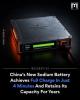 Chinese researchers have developed a sodium-metal battery that can fully charge in just 4 minutes...
 SpaceX Starship Flight 13 in 3 Days - Thursday July 13
 Chinese Scientists Develop Nuclear Battery Using Carbon-14
 Teleoperated humanoid robots complete first-ever live surgery
 Floating capsule auto-disinfects water without chemicals or battery
 Modular Reactors To Solve Data Center Hysteria?
 DeepSeek Developing In-House AI Chip In Bid To Cut Nvidia Reliance



Batteries That Use Sodium Instead of Lithium Could Be Low-Cost Rival to Tesla's
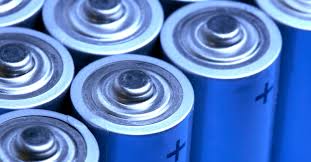
Since sodium is much more abundant and widely available than lithium, using it for batteries could cut raw material costs for manufacturers and reduce supply chain risks that surround critical minerals.
Conducted by a German university, the research published on May 28 in the Cell Press journal Physical Science, looked at the battery designed by Hina, a spin-off company of the Chinese Academy of Sciences that has partnered with automakers like JAC to provide EV batteries.
It shows that "once the sodium-ion (or Na-ion) battery is tweaked to charge more effectively at low temperatures and function better at high energy densities, it could provide a cost-effective alternative for future electric vehicle batteries".
"The combination of good uniformity, high power capability, and strong low?temperature performance makes these cells attractive for stationary storage, grid services, and shorter?range or commercial vehicles where potential lower?cost and resource availability matter more than maximum driving range," said Moritz Schütte, a battery researcher at RWTH Aachen University in Germany.
To assess how HiNa batteries compare to more advanced Tesla batteries, Schütte's team used a non-destructive technique called impedance spectroscopy to measure the uniformity of 120 sodium-ion battery cells. Next, to map out the power and energy performances of individual cells under real-life conditions, the team tested the batteries at varying currents and at temperatures from −20?°C to 45?°C. They also used X-rays to see the battery's internal structure, then opened up the cells to measure their electrode dimensions, compositions, and microstructures.
They found that the battery uses a tabless (design), a double-aluminum current collector design that reduces resistance and ensures a uniform temperature distribution—and also mirrors the current design of Tesla batteries.
"We were positively surprised by how uniform the cells are," says Schütte.
However, the sodium-ion battery has some limitations when it comes to energy density and charging at low temperatures. "The high?power performance was better than one might expect from an early commercial sodium?ion product," says Schütte.
"For applications that require frequent charging at low ambient temperatures, appropriate thermal management or operating strategies will be important because low-temperature charging remains a clear weakness."
The researchers also found unexpectedly high, unevenly distributed levels of copper in certain cathode regions of the battery, which "raises interesting questions about its role in performance and aging," said Schütte.