










Breaking News
 Iran War Effect Marks the Resetting of World Geo-politics
 Oil 'powder keg': Trump says Hormuz blockade may last all summer
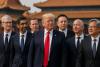 Xi closes the door after promising US CEOs to open wider
 THEY WON
Top Tech News
 Elon and SpaceX Have Made AI Training 10 Times Faster
 Oklo COO Says Nuclear Waste Could Power America For 150 Years
 SpaceX Announces LARGEST Starship Mission Ever! They've never done this before!
 Cars Are Fast Becoming Dystopian Prison Pods...
 Our Emergency Water Plan Wasn't Good Enough - So We Built This
 Sodium Ion Batteries Can Reach 100 Gigawatt Per Hour Per Year Scale in 2027
 Juiced Bikes proves capable electric motorcycles don't have to cost a lot
 Headlight projectors turn your car into a drive-in theater
 US To Develop Small Modular Nuclear Reactors For Commercial Shipping
 New York Mandates Kill Switch and Surveillance Software in Your 3D Printer ...



Iran War Effect Marks the Resetting of World Geo-politics
As so often happens, the mediators (Pakistanis and Qataris) hope to manage both sides by telling one side that the other party is at the brink of agreement when it is not so, especially in an atmosphere of total mistrust. By these means the mediators hope to push matters towards a final agreement. It is a familiar tactic, but one that quite often results in confusion and distrust – rather than the hoped-for settlement.
The "plan" at this stage has only two central pillars: Iran's "reopening" of the Strait of Hormuz (on Iran's terms) in return for the lifting of the US naval blockade, and – at a later date – an understanding that the dilution of Iran's 60 percent enriched uranium would be tackled in return for an end to sanctions.
To say the devil is in the detail would be the understatement of the year. Iran understands that Trump's headliners of an "imminent deal" are firstly, intended to keep the US stock market up and oil futures trading well below that of the delivery price of physical oil. And secondly, to obfuscate that Trump may be seeking a plausible way to end the war via striking a quick, incomplete deal that would, in all likelihood, be largely on Iran's terms.
All other issues – including the crucial detail of any nuclear agreement – would be deferred.
Trump wants from Iran an initial concession that he can hail as a visible win – and one that will please markets, too. But Iran will not trade its military leverage, and certainly not the strategic dominance that it achieved in the war, nor Hormuz, for fuzzy assurances from the mediators. Iran does not trust the US one iota.
Ali Akbar Velayati, Senior Adviser to Iran's Supreme Leader observes,
History bears witness that everyone who came seeking domination, from Alexander to Genghis Khan and Trump, ultimately ended up dissolving into the heart of ancient Iranian civilization. This time, Iran's red line is clear: papers and signatures alone are no guarantee. The tangible guarantor of the agreement's survival is the Strait of Hormuz.
For geography does not lie, and it is the final judge over every covenant written on paper.
The mediators naturally are desperate to avoid another round of war. Iran however, demands hard detail. This is Trump's dilemma. He wants a quick win, but the mere hint of a fudged, incomplete deal – mainly on Iran's terms – brought the wrath of the pro-Israel billionaire class down upon his head (the pushback was intense), and Israel (likely with encouragement from that same class) then blew up Trump's ceasefire by launching ascorched-earth military assault on Lebanon, and on Gaza and its citizens, so breaching the ceasefire precondition for any deal.
Trump is in zugzwang. (Any move he makes, potentially only worsens his position, whether strategically or domestically).
We saw this same zig-zagging, back of an envelope, non-strategy perfectly illustrated in the iconic imaging from Trump's Beijing visit – Trump "winged it"; no prior preparation; a "seat of the pants" summit.
That image may perhaps come to define this era – today's iconic moment was of a US President wearing the air of defeat whilst a confident President Xi's comportment demonstrated who was in control.
Why, one may ask, would the pro-Israel class risk the West being wrecked by the economic consequences of a prolonged closure of Hormuz that would be entailed by their angry veto of Trump's mooted "deal"? Possibly because Jewish "Big Money" – since the 2008 crisis and the subsequent structural transfer of wealth from the real economy to the financialised "trader élite" – may lead them to feel immune to economic downturn. They may even see it as an "opportunity" (leading to assets going cheap).