










Breaking News
 U.S. Harvest Under Water: Pre-Scripted Food Crisis Accelerates as Breadbaskets Fail
 Europe is buying relief today by drawing down its protection for winter.
 What the Cornell Rape Allegation Really Tells Us Is that Sexual Morality Is Stone Dead...
 Do "news reports" Have Any Value?
Top Tech News
 Most artificial limbs rely on silicone or plastic to mimic human hands.
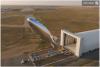 Flying cell tower beams phone signal to Japan from 10 miles up
 Chinese Commercial Reactor Achieves Nuclear Fusion with Clean Hydrogen-Boron Fuel
 Med Beds Just Took a MASSIVE Step Forward, Healing People in Days!
 Palmer Luckey: Autonomous Weapons Are Ancient and Why Anduril Won't Build Humanoids | EP #295
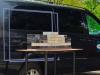 A laser just photographed objects through six feet of concrete
 Elon Musk's Next-Gen Motor Destroy Entire EV Industry
 China's disputed satellite refueling heralds new space war era
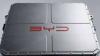 BYD Will Put Solid-State Batteries In An EV Next Year: Executive
 FDA-cleared exoskeleton puts spinal-cord patients back on their feet



US To Develop Small Modular Nuclear Reactors For Commercial Shipping

The initiative, launched by DOT Secretary Sean P. Duffy and the Maritime Administration (MARAD), has issued a Request for Information (RFI) for this purpose. An RFI is a formal document to gather preliminary information regarding a good or service from suppliers. In this specific case, the purpose of the RFI is to investigate whether the advancements in SMR technology and other developments are "usable, scalable, and can be made commercially viable," according to the RFI published in the Federal Register on May 7.
SMRs have a power generation capacity of up to 300 megawatts, which is roughly a third of the traditionally larger nuclear power reactors. While the big reactors are typically custom-designed for a specific location, SMRs can be manufactured as pre-fabricated units and then transported and installed at any location.
MARAD is calling on industry stakeholders and innovators to help in the development of an SMR model that would revitalize the U.S. shipping industry, cut down transportation costs, and secure energy dominance, the DOT statement said.
"To successfully introduce SMRs, we must view this through a system-transition lens rather than just as a technology demonstration," MARAD Administrator Stephen M. Carmel said.
"We are seeking critical insights on how the government can help reduce systemic uncertainty, align regulatory structures, and enable the market conditions necessary for private capital and operators to scale these groundbreaking technologies."
The federal government is seeking inputs from the industry to advance the development of SMRs that would mostly eliminate fuel costs and minimize maintenance requirements, identify streamlined methods to deploy nuclear power across the nation's fleets and logistical networks, integrate SMR production into American shipyards, and set up liability, inspection, and insurance frameworks on this matter.
MARAD is collaborating with the DOT, Nuclear Regulatory Commission, and the U.S. Coast Guard to support the development of SMRs.
According to the DOT, the SMR initiative advances two of President Donald Trump's executive orders—Unleashing American Energy issued on Jan. 20, 2025, and Restoring America's Maritime Dominance issued on April 9, 2025.
The Jan. 20 order instructed the heads of all agencies to review regulations, policies, and orders that impose "undue burden" on the identification, development, or use of domestic energy resources, including nuclear power.
The April 9 order said it is the policy of the United States to rebuild and revitalize America's maritime industries and workforce to ensure economic prosperity and safeguard national security.