










Breaking News
 The Israelization of the United States Military Is Proceeding
 Trump names housing chief Bill Pulte acting intelligence director, replacing Tulsi Gabbard
 #TBOT 23: KYC for Your Phone, New ReCAPTCHA, UK Digital ID, Decentralized Social Media – NOSTR
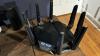 Alarming: Wi-Fi Routers Can Scan Your Body to Identify Exactly Who You Are
Top Tech News
 Elon and SpaceX Have Made AI Training 10 Times Faster
 Oklo COO Says Nuclear Waste Could Power America For 150 Years
 SpaceX Announces LARGEST Starship Mission Ever! They've never done this before!
 Cars Are Fast Becoming Dystopian Prison Pods...
 Our Emergency Water Plan Wasn't Good Enough - So We Built This
 Sodium Ion Batteries Can Reach 100 Gigawatt Per Hour Per Year Scale in 2027
 Juiced Bikes proves capable electric motorcycles don't have to cost a lot
 Headlight projectors turn your car into a drive-in theater
 US To Develop Small Modular Nuclear Reactors For Commercial Shipping
 New York Mandates Kill Switch and Surveillance Software in Your 3D Printer ...



Alarming: Wi-Fi Routers Can Scan Your Body to Identify Exactly Who You Are

These aren't welcome findings, because almost every home in America has a Wi-Fi router. Theoretically, once you have been ID'd by your personal router (if it has built-in beam forming technology), other similar Wi-Fi signals anywhere in the world could "see" you passing by. This is the type of tech that could be added to your biometric profile as a fail-safe ID that can't be spoofed. Cameras might see your face to ID you, but you cannot hide from Wi-Fi. ? Patrick Wood, Editor.
If you were paranoid about digital tracking before, you might want to think twice about reading any further.
New research out of Germany's Karlsruhe Institute of Technology found that the types of Wi-Fi routers we all have in our homes come with a major privacy vulnerability that can be used to identify any human body that comes within their range.
The study, flagged by Gizmodo, used machine learning systems to identify individuals with an accuracy rate of 99.5 percent. To do so, the researchers exploited a vulnerability in a process known as beamforming feedback information (BFI), which was introduced to allow routers to focus Wi-Fi signals on connected devices, as opposed to the older approach, which is to blanket an entire area in coverage.
While BFI is great for network connectivity, it has a major downsides for privacy. For starters, devices connected to a router using beamforming need to send constant feedback in order to be found. As routers send out and receive network feedback, the signal is inevitably impacted by real world factors like pets, walls, and people.