










Breaking News
 Trump Should Just Admit He Screwed Up
 The Fascinating Properties of Ivermectin
 Why Did Greene and Massie Have To Be Removed?
 Joe Kent Reveals TRUE Reason We Are at War With Iran! POWERFUL FULL INTERVIEW:
Top Tech News
 Elon and SpaceX Have Made AI Training 10 Times Faster
 Oklo COO Says Nuclear Waste Could Power America For 150 Years
 SpaceX Announces LARGEST Starship Mission Ever! They've never done this before!
 Cars Are Fast Becoming Dystopian Prison Pods...
 Our Emergency Water Plan Wasn't Good Enough - So We Built This
 Sodium Ion Batteries Can Reach 100 Gigawatt Per Hour Per Year Scale in 2027
 Juiced Bikes proves capable electric motorcycles don't have to cost a lot
 Headlight projectors turn your car into a drive-in theater
 US To Develop Small Modular Nuclear Reactors For Commercial Shipping
 New York Mandates Kill Switch and Surveillance Software in Your 3D Printer ...



Trump Should Just Admit He Screwed Up
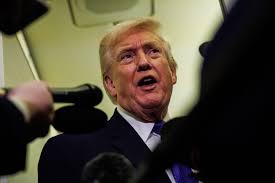
Although we don't know the details of the rumored agreement between the United States and Iran—or even if one will eventually be reached—anyone with a triple-digit IQ understands that Israel and the United States made a colossal blunder when they started the war. None of their stated goals have been achieved: The Iranian regime did not collapse, it did not surrender its nuclear stockpile, and its missile and drone capabilities are intact. It has demonstrated that it can shut down the Strait of Hormuz anytime it wants to inflict significant damage on its neighbors. All of U.S. President Donald Trump's and U.S. Defense Secretary Pete Hegseth's bragging and bluster over the past three months has been exposed as a lot of hot air.
Once a deal is reached, the Trump administration will apply buckets of lipstick to this pig and insist that it is some sort of strategic victory. Few observers will be convinced, however, and such efforts will just make the president and his coterie of sycophantic advisors look silly. There's just no credible way to spin this debacle as a success. The more they try to do so, the more delusional they'll appear.
That got me thinking: What if Trump just admitted that he'd made a mistake? Admitting errors has never been his forte, but he's not alone in that regard. Politicians almost never admit errors—and certainly not about something important—even when it is obvious to nearly everyone that they've blundered. Former British Prime Minister Boris Johnson keeps defending Brexit, for example, and former U.S. Secretary of State Mike Pompeo still insists that invading Iraq in 2003 and tearing up the 2015 nuclear deal with Iran during Trump's first term were smart moves.
This reluctance to acknowledge obvious errors is a bit puzzling. We all know that no one is infallible, and foreign policy is an uncertain business, where even the best-laid plans can go awry. No leader gets everything right, even if they are wiser and less impulsive than Trump (admittedly a low bar). Most of us also learn that when we screw up, the best thing to do is acknowledge the error, learn from the experience, and try not to repeat it. Obviously, a leader who keeps making costly mistakes will eventually pay a price—and deservedly so—but officials who, for the most part, perform well and have the courage to admit the occasional mistake might become more popular if the public recognized they were doing their best and appreciated their honesty.
Yet few leaders seem willing to go this route. Autocrats are especially loath to admit mistakes, because their hold on power typically rests on cults of personality and sustaining the illusion that they are infallible. But even democratic leaders are reluctant to admit errors while in office, if only because they know their opponents will be ready to pounce at the slightest admission. Take the following U.S. presidents, for example: John F. Kennedy took full responsibility for the Bay of Pigs fiasco, Barack Obama owned his early decision to appoint Tom Daschle as head of the U.S. Department of Health and Human Services (which backfired when Daschle's tax irregularities were exposed), and Ronald Reagan more-or-less admitted that the Iran-Contra affair was a mistake. But such moments are rare. When U.S. President George W. Bush was asked in 2004 to recall any mistakes that he had made in his first term, he couldn't identify a single one. If you want to see politicians admit they erred, then you will usually have to wait for their memoirs to come out and even then you may be disappointed.