










Breaking News
 Trump Should Just Admit He Screwed Up
 The Fascinating Properties of Ivermectin
 Why Did Greene and Massie Have To Be Removed?
 Joe Kent Reveals TRUE Reason We Are at War With Iran! POWERFUL FULL INTERVIEW:
Top Tech News
 Elon and SpaceX Have Made AI Training 10 Times Faster
 Oklo COO Says Nuclear Waste Could Power America For 150 Years
 SpaceX Announces LARGEST Starship Mission Ever! They've never done this before!
 Cars Are Fast Becoming Dystopian Prison Pods...
 Our Emergency Water Plan Wasn't Good Enough - So We Built This
 Sodium Ion Batteries Can Reach 100 Gigawatt Per Hour Per Year Scale in 2027
 Juiced Bikes proves capable electric motorcycles don't have to cost a lot
 Headlight projectors turn your car into a drive-in theater
 US To Develop Small Modular Nuclear Reactors For Commercial Shipping
 New York Mandates Kill Switch and Surveillance Software in Your 3D Printer ...



Trump's Abraham Accords push bedevils Iran peace try
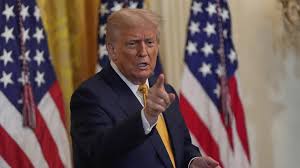
President Donald Trump's latest attempt to end the war with Iran has taken an unexpected turn. Instead of focusing only on a ceasefire, the reopening of the Strait of Hormuz and Iran's nuclear program, Trump now appears to be linking any broader peace settlement to Arab and Muslim countries recognizing Israel through the Abraham Accords.
In a Truth Social post, Trump said he had spoken with leaders of Saudi Arabia, the United Arab Emirates, Qatar, Pakistan, Turkey, Egypt, Jordan and Bahrain.
He reportedly urged them to sign onto the Abraham Accords, the 2020 agreements that normalized relations between Israel and several Arab states. Israeli Prime Minister Benjamin Netanyahu was reportedly not part of the call.
Trump's demand is ambitious, but it also creates serious diplomatic complications. The Abraham Accords were one of Trump's major foreign-policy achievements during his first term. Brokered in September 2020, they led the United Arab Emirates and Bahrain to establish official diplomatic relations with Israel.
Sudan later agreed to normalize relations, though its ratification was delayed by civil war. Morocco joined in December 2020, while Kazakhstan, which already had diplomatic ties with Israel since the 1990s, joined the accords last November.
The regional response to Trump's latest appeal is likely to be cautious, if not resistant. Pakistan has already rejected the idea out of hand. Defense Minister Khawaja Muhammad Asif told Samaa TV that joining such an agreement would clash with Pakistan's fundamental ideologies.
Among the countries Trump named, Saudi Arabia, Qatar and Pakistan do not have formal diplomatic relations with Israel. Egypt and Jordan already recognized Israel through separate peace agreements in 1979 and 1994. Turkey recognized Israel in 1949, although its relations with Israel have sharply deteriorated and bilateral trade was suspended over the Gaza war.
So far, no other country besides Pakistan has publicly responded to Trump's demand. According to a US official cited by Axios, leaders on the call, especially those from Saudi Arabia, Qatar and Pakistan, appeared stunned. The official said there was silence on the line, prompting Trump to joke and ask whether they were still there.
Saudi Arabia's position remains especially important. After the Israel-Hamas ceasefire last October, Trump again suggested that Riyadh join the accords.
Crown Prince Mohammed bin Salman later said Saudi Arabia was open to joining, but only if there was a clear path toward Palestinian sovereignty. Israel's far-right government, however, opposes both Palestinian sovereignty and a two-state solution.