










Breaking News
 The AI Bird-Flu Scenario They Just Published
 Japan's first robot ambulance works the 9-1-1 lines for humanoids
 Cheap smartphone add-on pinpoints hidden cameras to shut down spies
 The $600 Tank That Beats a $10,000 Powerwall
Top Tech News
 Terrifying AI Behavior Even Its Creators Couldn't Explain
 WW3 Near-Miss? AI Hallucinated Nuclear Weapons Components Aboard Chinese Vessel Bound For Iran
 Stripe Is Building the Toll Road for the Machine Economy
 Toyota Dakar hopeful swaps twin-turbo V6 for hydrogen fuel cells
 4-min turbo-inflatable cubic camp castle is now available in the USA
 Researchers Used Claude To Hack OpenAI Employee Accounts
 Chinese Scientists Develop New Oil Refining Method That Cuts Energy Use by 90%
 World's smallest CT scanner fits in the palm of your hand
 The Tesla Roadster will blow people's minds
 Peter Thiel-Funded Company Anduril to Triple the Number of Autonomous Surveillance Towers...



'Spin-flip' system pushes solar cell energy conversion efficiency past 100%
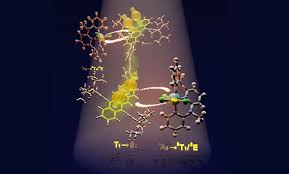
At first glance, the results of the research, conducted with collaborators at Johannes Gutenberg University in Germany, sound fanciful at best. However, the reality is far more nuanced. Using a molybdenum-based "spin-flip" metal complex paired with a singlet fission material, the scientists managed to generate more usable energy carriers than incoming photons.
Let's break things down.
At any given moment during the day, the Earth receives roughly 89,000 terawatts of solar energy – almost 5,000 times the global human energy consumption annually. However, modern solar technologies capture only a fraction of it.
Photovoltaic solar cells, the kind that most likely come to mind when you think of solar panels, convert only about 20% of the sunlight that hits them into usable electricity. The conversion limitations primarily stem from the Sun itself.
Solar cells convert light into electricity through a relatively simple process. Photons, which are packets of light energy, stream in from the Sun and strike a semiconductor material, typically silicon. When a photon hits, it transfers its energy to an electron in the semiconductor, knocking it loose and setting it in motion. The energized moving electrons constitute an electric current.
The problem is that photons are not all equal. They arrive with wildly different energy levels depending on their wavelength. Infrared photons, at the low-energy end of the spectrum, do not carry enough energy to knock electrons loose at all. Instead, they pass through or are absorbed as heat, wasted. Blue light photons, on the other hand, carry far more energy than is needed to free an electron. The excess is shed as heat, also wasted.
This fundamental mismatch between the energy supply and the semiconductor's electron threshold imposes a hard ceiling on efficiency known as the Shockley-Queisser limit. For a standard single-junction solar cell, that ceiling is around 33%.
Even with perfect engineering, you cannot extract more than a third of incoming solar energy this way. This is why even the very best commercially available solar panels do not surpass 25% conversion efficiency.
Now, under normal conditions, one photon excites one electron, creating a single unit of usable energy, known as an exciton. Even when a photon with more energy than needed hits the solar cell, only one exciton is generated. The rest of the energy is wasted as heat. So it's always one photon, one exciton. This has always been considered a given. But what if it were not? This question forms the basis of the Kyushu research. The team's approach centers on a phenomenon called singlet fission.