










Breaking News
 We Bought 8.7 Acres for $14,000 - Now We Are Greening the Desert with Earth Smiles
 Dear America, We Do Not Beat China in the AI Race if We Become China in the AI Race
 Bot Farms, JD Vance, NATO, Charlie Kirk, Israel & the Globalist Propaganda Network Connecting It All
 The Number of Regular People Being Arrested for Protesting Data Centers Is Astounding
Top Tech News
 Idaho's High Desert Becomes Hot Spot For Nuclear Power Revolution
 The World's Largest Electric Aircraft Is About to Take Its First Flight
 Tesla Cybercabs and Superchargers Will Act as Mini Cell Towers for SpaceX Starlink
 Elon Vows AI-Made 'Odyssey' After Blasting Nolan's Take On Homer
 Anthropic is launching its own drug discovery programs for rare diseases using Claude...
 SpaceX AI Satellites Will Have 250 Kilowatts of Power
 Chinese researchers have developed a sodium-metal battery that can fully charge in just 4 minutes...
 SpaceX Starship Flight 13 in 3 Days - Thursday July 13
 Chinese Scientists Develop Nuclear Battery Using Carbon-14
 Teleoperated humanoid robots complete first-ever live surgery



DARPA chooses two to develop insect-size robots for complex jobs like disaster relief...
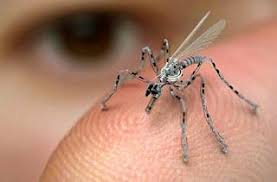
ARLINGTON, Va. – U.S. military researchers have chosen two organizations to develop enabling technologies for insect-size robots able to perform complex jobs like disaster relief or inspecting hazardous environments that are inaccessible to larger robots.
Officials of the U.S. Defense Advanced Research Projects Agency (DARPA) in Arlington, Va., have awarded two contracts over the past two weeks for the SHort-Range Independent Microrobotic Platforms (SHRIMP) project.
SHRIMP, sponsored by the DARPA Microsystems Technology Office, is developing new actuators, multi-mode power for future untethered insect-scale robots -- also called micro-to-milli robotic platforms.