










Breaking News
 Trump's FCC Seeks to Strip Even More Local Control Over 5G Rollout
 How - and What - Investors Steal from the Public
 President Trump's 'Mission Accomplished' Moment
 Silver and the 401(k) Precious-Metals Rule Change for 2026
Top Tech News
 This tiny dev board is packed with features for ambitious makers
 Scientists Discover Gel to Regrow Tooth Enamel
 Vitamin C and Dandelion Root Killing Cancer Cells -- as Former CDC Director Calls for COVID-19...
 Galactic Brain: US firm plans space-based data centers, power grid to challenge China
 A microbial cleanup for glyphosate just earned a patent. Here's why that matters
 Japan Breaks Internet Speed Record with 5 Million Times Faster Data Transfer
 Advanced Propulsion Resources Part 1 of 2
 PulsarFusion a forward-thinking UK aerospace company, is pushing the boundaries of space travel...
 Dinky little laser box throws big-screen entertainment from inches away
 'World's first' sodium-ion flashlight shines bright even at -40 ºF



Radial-flux motors supercharge new hybrid supersonic engine design
In the 1940s, Commander Lee Lewis, Commander G. Halvorson, S. F. Singer, and Dr. James A. Van Allen came up with one of the strangest mixtures of technologies ever – the rockoon, which was a combination of a rocket and a balloon. At first glance, it seemed about as silly as things could get, with a small rocket being hoisted high into the air by a balloon to ignite at high altitude.
It seems not only daft but overcomplicated, yet it addressed a very real problem, which was how to get a rocket to fly through the dense lower layers of the atmosphere without wasting a lot of fuel. It also meant that sounding rockets could be safely launched from ships far out at sea where the spent vehicles could crash into the water nowhere near inhabited areas.
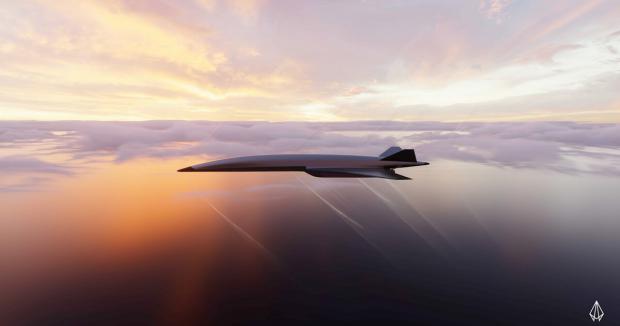
The idea of a hybrid-electric engine for supersonic aircraft may elicit a similar initial response, but there is some very firm engineering logic behind it.
Put simply, conventional supersonic engines are jet engines that are capable of reconfiguring themselves to operate at air speeds beyond Mach 1. That means shifting the flow of air and moving components about to slow down and cool incoming air so it doesn't destroy the engine as well as making sure that the engine runs as efficiently as possible.