










Breaking News
 'UNFAIR': Mamdani's city-run grocer plan SLAPPED with lawsuit
 Trump Says If Iran Had a Nuclear Weapon, He Would Have Politely Called the Supreme Leader...
 Tucker Carlson: We are on the brink of a world war that ends with the use of nuclear weapons
 Who is trying to destroy the United States and the world?
Top Tech News
 Freezable titanium plate keeps your cooler chilled way longer than ice packs
 Review: Affordable thermal device is made for discovering life outdoors
 AI Whistleblower Tells Tucker How AI Could Kill All Humans by 2040
 You Hate Flock? Well There's More...
 Will Spiking Diesel Prices Drive Autonomous Trucking?
 Chinese Concept Video Imagines the Future of Warfare
 OPTIMUS CONFIRMED: 15,000 Bots This Year -- Tesla to $3,000
 What is Going On With Robotaxi and Cybercab? Here Are All the Answers
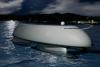 Floating data center would provide water and electricity to 32,000 homes
 OpenAI Cuts Off Elon's Cursor, Humanity's First Star Probe, and Trump's Nuclear Mars Shi



Advanced Propulsion Resources Part 1 of 2
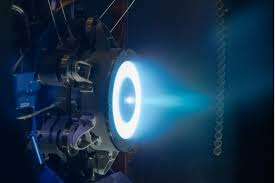
For those interested in learning about Advanced Propulsion methods related to spaceflight or wish to delve into Breakthrough Propulsion Physics or wish to become a Propulsion Physicist, here's a list of books, papers and other resources that the author of this article has found well worth reading or watching with some suggestions. This author has categorized the resources in various topics that are of particular interest to his areas of interest and research. This area of Applied and Theoretical Physics is a vast topic covering multiple disciplines intertwined with Materials Science and Engineering. There are literally hundreds of potential propulsion system configurations conceived depending on mission type within the solar system and beyond. The author of this article has only listed publications he has read and recommends so. It is by no means a complete list. Any suggested additions the reader can recommend, feel free to drop the author a line.
One will need a good grasp of Physics and Mathematics (differential and integral calculus as a minimum) to understand the various physical principles involved. It is strongly recommended doing a degree in Physics at a local university or if that's not an option, there are plenty of resources online to get one started. OpenStax (Rice University) is an excellent peer reviewed resource with free online textbooks covering Physics, Astronomy and Mathematics. For another good free Physics textbook, read Motion Mountain which uses a different approach to teaching Physics with less emphasis on the maths and more on the understanding of the physical concepts.
A well rounded Propulsion Physicist should read from a variety of sources and keep up with the latest developments because in this field new insights and developments come up often. The author recommends joining LinkedIn, there are a lot of highly skilled and very smart people on this platform who post relevant updates or articles which can be very informative (and some not so informative or wrong), so cross check their claims, facts, sources, figures and assess accordingly. There are free repositories that one should closely monitor.
Included are some sites that the author takes time to read on a regular basis, these also provide useful commentary on the latest developments, useful organisations to join and other items:
viXra (not peer reviewed)
Not Even Wrong, by Peter Woit.
Backreaction, by Sabine Hossenfelder.
Centauri Dreams, by Paul Gilster.
Space Settlement Progress, by John Jossy.
Scott Manley runs a Youtube channel with interesting space related news.
Marcus House also runs a channel with the latest news.
Atomic Rockets, by Winchell Chung. Although geared as a resource for Science Fiction writers, there is a vast amount of technical diagrams, sample calculations and other useful information related to Nuclear Thermal Propulsion and other advanced propulsion concepts. The reader might be specifically interested in these sections of the website: Engine List 1 | Engine List 2 | Engine List 3.
LyX, when one is ready to publish physics papers, use this excellent and free WYSIWYM LaTeX editor. It will handle any mathematical equation one throws at it including Feynman diagrams, graphics etc, does the lot.
NASA TOPS, do this course which explains the methods and tools of the trade to practice Open Science and how this will benefit one's research and career. Practicing Open Science has many advantages for the advancement of all areas of Science, this is the way for 21st century research, read this article by Lisa L. Lowe.