










Breaking News
 How to Prep in Short-Term Locations
 Revolut Leak Shows the Cost of Constant ID Collection
 15 US Coffee Brands to Avoid -- And 5 That Are Actually Real Coffee
 Why Scammers Stay Silent for 3 Seconds When You Pick Up
Top Tech News
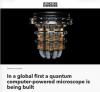 Quantum computing may soon become part of the microscope itself.
 Volkswagen Just Unveiled The Most Efficient EV Ever Tested
 NASA Super Light Solar Sail Project Will Be 12-40 Times Lighter and Faster
 Space Telescope Interferometer to Image Exoplanet Continents
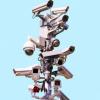 Twenty-five years of "temporary": how 9/11 built a surveillance state Americans never vote
 I'll Never Buy Another WALMART Battery!
 Shoei GT-Air 3 Smart helmet drops with built-in AR for $1,500
 AI Whistleblower Tells Tucker How AI Could Kill All Humans by 2040
 You Hate Flock? Well There's More...
 Will Spiking Diesel Prices Drive Autonomous Trucking?



Japan Breaks Internet Speed Record with 5 Million Times Faster Data Transfer

While most of us are still waiting for our WiFi to load a single video, Japanese scientists achieved something that sounds like pure science fiction. They've hit a data transfer speed so fast, it makes our current internet look like we're still using dial-up from 1999.
This isn't just an upgrade, this is a complete revolution in how we'll connect to the world.
----------
The National Institute of Information and Communications Technology (NICT) in Japan didn't just break the world record, they absolutely obliterated it.
https://lnkd.in/gnZeFshi
Using experimental fiber-optic cables that transmit data through four separate wavelengths of light at once, they reached speeds that were previously thought impossible outside of theoretical physics papers.
To put this in perspective, the average home internet speed in the US is around 200 megabits per second. This Japanese breakthrough is over 5 MILLION times faster. We're talking about transferring the entire contents of the Library of Congress in a fraction of a second. Every photo ever uploaded to Instagram? Done before you finish reading this sentence.
But this isn't just about downloading movies faster. This technology could revolutionize everything from telemedicine and remote surgery to real-time climate modeling, instantaneous global communications, and powering the next generation of AI systems that need massive amounts of data processed in real time. Imagine smart cities that respond instantly, autonomous vehicles that communicate without any lag, or virtual reality so seamless it's indistinguishable from real life.
The technology is still experimental and won't be available to consumers anytime soon, but the fact that it's possible means we're looking at a future where data limitations are essentially eliminated.
Japan continues to prove why they're at the forefront of technological innovation, and the rest of the world is taking notes.