










Breaking News
 Engineered backdoors in technology, have given intelligence agencies unfettered powers.
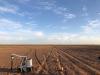 AI-Powered Robots Plant Trees in China's Deserts
 Judge Temporarily Blocks DOJ From Using Evidence Proving James Comey's Guilt
 Offer Royale: Paramount-Netflix Bidding War For Warner Bros Heats Up In A Blockbuster Showdown
Top Tech News
 Build a Greenhouse HEATER that Lasts 10-15 DAYS!
 Look at the genius idea he came up with using this tank that nobody wanted
 Latest Comet 3I Atlas Anomolies Like the Impossible 600,000 Mile Long Sunward Tail
 Tesla Just Opened Its Biggest Supercharger Station Ever--And It's Powered By Solar And Batteries
 Your body already knows how to regrow limbs. We just haven't figured out how to turn it on yet.
 We've wiretapped the gut-brain hotline to decode signals driving disease
 3D-printable concrete alternative hardens in three days, not four weeks
 Could satellite-beaming planes and airships make SpaceX's Starlink obsolete?
 First totally synthetic human brain model has been realized
 Mach-23 potato gun to shoot satellites into space


AI-Powered Robots Plant Trees in China's Deserts

Powered entirely by the sun, these AI-driven machines are doing something no human army could achieve at this scale. They're turning one of Earth's harshest landscapes green again, one sapling at a time.
This is what happens when cutting-edge technology meets climate action.
--------
These ecological warriors are rewriting the rules of desert restoration.
Each robot uses ground-sensing technology to identify ideal planting locations, measuring moisture levels and sand composition before deploying seeds with protective capsules. The AI systems allow them to adapt in real-time, adjusting planting depth and spacing based on terrain conditions that change with every gust of wind.
In Inner Mongolia and other vulnerable regions, desertification has been advancing at an alarming rate, swallowing farmland and threatening communities. Traditional reforestation efforts require massive human resources and often yield low survival rates in extreme conditions. These robots flip that equation completely. They can work through sandstorms, extreme heat, and terrain too dangerous for human teams, all while running on clean solar energy with zero emissions.
The swarm intelligence is perhaps the most fascinating aspect. Multiple robots communicate wirelessly, sharing data about soil conditions, coverage patterns, and successful planting zones. They coordinate like a digital ecosystem, ensuring no area is over-planted or missed entirely. Early pilot programs have shown survival rates exceeding 80% for saplings planted by these machines, compared to 40-50% with conventional methods.
China's goal is ambitious but achievable with this technology. The Green Great Wall initiative aims to plant nearly 90 billion trees across 4,500 kilometers by 2050. With these solar-powered planters scaling up production, what once seemed impossible is becoming reality. Every step these robots take is a step toward reversing decades of environmental damage.