










Breaking News
 Parsley: Nature's Powerful Ally in the Fight Against Cancer and Chronic Disease
 March 2: nobody to call
 Iran's Khamenei Killed & Austin Mass Shooting | PBD #750
 'Just Flatten It' Is the West's Answer to War
Top Tech News
 US particle accelerators turn nuclear waste into electricity, cut radioactive life by 99.7%
 Blast Them: A Rutgers Scientist Uses Lasers to Kill Weeds
 H100 GPUs that cost $40,000 new are now selling for around $6,000 on eBay, an 85% drop.
 We finally know exactly why spider silk is stronger than steel.
 She ran out of options at 12. Then her own cells came back to save her.
 A cardiovascular revolution is silently unfolding in cardiac intervention labs.
 DARPA chooses two to develop insect-size robots for complex jobs like disaster relief...
 Multimaterial 3D printer builds fully functional electric motor from scratch in hours
 WindRunner: The largest cargo aircraft ever to be built, capable of carrying six Chinooks
 RNA Crop Spray: Should We Be Worried?


Mach-23 potato gun to shoot satellites into space
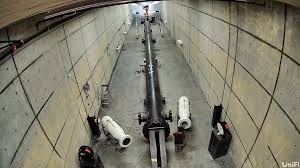
I had an opportunity to sit down with the CEO and founder of Longshot, Mike Grace. "Longshot?" you ask? Prior to the other week, I'd have said the same. This was a company I'd not heard of in an area of which I'm not all that familiar with – flinging stuff into orbit sans rockets. SpinLaunch, sure.
You see, the other week I was forwarded an email from the boss that read something along the lines of "I'm super busy, but I think Joe would be up for it." Loz knows me pretty well over the last dozen or so years of collaborating on various projects. If he says I'd be interested, he's likely right.
Two years ago, Loz had written an article with "Nazi über-cannon" in the title. I balked when I read the title, but was immediately sucked into this wild idea and this equally wild CEO and how he was addressing potential investors.
Longshot wants to fire stuff out of a staged gas-powered cannon into space. And when I say cannon, I mean miles and miles of cannon at Mach 23. Wait, what?
We'll dig through history for a moment before getting back to present day:
The concept of using cannons to special-delivery items – iron balls, langrage, sabots, 155-mm HE shells, APFSDS long-rod darts – to neighboring villages and cities has been around for about 700 years ... you know, tools for war, death and destruction.
The concept of using cannons to blast people (or things) into space has been around since at least the 19th century, when Jules Verne penned the 1865 banger From the Earth to the Moon. In it, some bored artillery engineers build a massive 900-ft (274-m) cannon called the Columbiad. It's stuffed with a 9-ft (2.7-m) diameter capsule for three adventure-seeking astronauts and 20,000 lb of gun cotton to get the party started. I won't spoil the book for you if you haven't read it. I just wanted to illustrate that the idea has existed since long before you and I were born.
Fun fact: in the book, they launch from what's basically modern-day Cape Canaveral in Florida. And when they return to Earth? Yep, splash down in the ocean, just like the modern era. That Verne guy had it figured out. Never mind the 22,000 g's needed to get out of Earth's atmosphere.
Skip forward to the 1960s, when an upstanding Canadian gentleman by the name of Gerald Bull dials it up to 11 with Project HARP (High Altitude Research Project). The HARP team welded two 68-ft-long (20.7-m) 16-in/50 Mark 7 naval gun tubes with 16-inch (406.4-mm) bore diameters end-to-end as if they were straws and spitballs. With this 119-ft (36-m) monster cannon – about the same length as the infamous WWI Paris Gun – they shot something called the Marlet 2C 111.85 miles (180 km) into the air, well above the Kármán line – the transition between the atmosphere and outer space.