










Breaking News
 How to Prep in Short-Term Locations
 Revolut Leak Shows the Cost of Constant ID Collection
 15 US Coffee Brands to Avoid -- And 5 That Are Actually Real Coffee
 Why Scammers Stay Silent for 3 Seconds When You Pick Up
Top Tech News
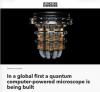 Quantum computing may soon become part of the microscope itself.
 Volkswagen Just Unveiled The Most Efficient EV Ever Tested
 NASA Super Light Solar Sail Project Will Be 12-40 Times Lighter and Faster
 Space Telescope Interferometer to Image Exoplanet Continents
 Twenty-five years of "temporary": how 9/11 built a surveillance state Americans never vote
 I'll Never Buy Another WALMART Battery!
 Shoei GT-Air 3 Smart helmet drops with built-in AR for $1,500
 AI Whistleblower Tells Tucker How AI Could Kill All Humans by 2040
 You Hate Flock? Well There's More...
 Will Spiking Diesel Prices Drive Autonomous Trucking?



Could satellite-beaming planes and airships make SpaceX's Starlink obsolete?
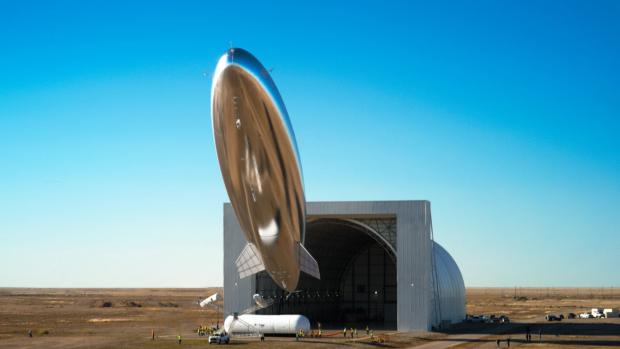
A new generation of stratospheric balloons and high-altitude uncrewed aerial vehicles (UAVs) could soon connect the world's unconnected with high-speed internet at a fraction of the prices commanded by operators of satellite megaconstellations such as SpaceX's Starlink.
High-altitude platform stations, or HAPS, have been around for a while, but the technology hasn't fully taken off yet. Google spent 10 years trying to develop balloons that would hover in the stratosphere above remote rural areas and beam internet to residents but abandoned that project, called Loon, in 2021, concluding that it couldn't be made sustainable.
Four years later, companies such as World Mobile Stratospheric and Sceye say they are on the verge of making internet-beaming from the stratosphere, the layer of Earth's atmosphere roughly 6 miles to 31 miles (10 to 50 kilometers) above the planet, a reality. Moreover, they claim that their offerings will be better and cheaper than that of satellite megaconstellations in low Earth orbit (LEO), which too have been developed with the promise of connecting the world's unconnected.
Richard Deakin, the CEO of World Mobile Stratospheric, said HAPS have failed to make it so far because they couldn't support power-hungry antennas needed to beam down high-bandwidth internet across vast swaths of land. Previously-tested high-altitude balloons and airships have relied on photovoltaics to generate power, which only provide "a couple of hundred watts," according to Deakin.
He said that his company's HAPS, an autonomous plane called the Stratomast, will be powered by liquid hydrogen, allowing it not only to hover for six days at an altitude of 60,000 feet (18 km), but also generate enough electricity to support a 10-by-10-foot (3 by 3 meters) phased-array antenna that could connect 500,000 users on Earth at the same time. After six days, a new aircraft would arrive to take over the service while the first returns to the base for refuelling.
Deakin says users will get 200 megabits per second (Mbps) of connectivity directly into their smartphones from Stratomast. That would be a vast improvement over Starlink's current direct-to-device offering of 17 Mbps, which is currently only capable of supporting emergency text messaging. Even AST SpaceMobile, which is building a constellation of giant orbiting antennas to beam internet directly to smartphone devices, can sustain only about 21 Mbps.
"When the Stratomast is flying, all these old satellites are going to be in museums," Deakin said.