










Breaking News
 This is the future we shall bring into being
 Elon Musk's Vision For The Future Looks Like A Movie
 Phosphorus Munitions Fired by Israel Burn Groves, Orchards in Southern Lebanon
 Iran's IRGC Warns It Will Expand 'Geography of the War' If the US Attacks Again
Top Tech News
 BEYOND THE MOON: NASA plans a nuclear-powered fleet to push DEEPER into space
 Big Oil Backs Mazama's $135 Million Bet On Superhot Geothermal
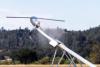 Quantum compass takes flight on Northrop's Lumberjack drone
 Terrifying AI Behavior Even Its Creators Couldn't Explain
 WW3 Near-Miss? AI Hallucinated Nuclear Weapons Components Aboard Chinese Vessel Bound For Iran
 Stripe Is Building the Toll Road for the Machine Economy
 Toyota Dakar hopeful swaps twin-turbo V6 for hydrogen fuel cells
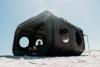 4-min turbo-inflatable cubic camp castle is now available in the USA
 Researchers Used Claude To Hack OpenAI Employee Accounts
 Chinese Scientists Develop New Oil Refining Method That Cuts Energy Use by 90%



Latest Comet 3I Atlas Anomolies Like the Impossible 600,000 Mile Long Sunward Tail
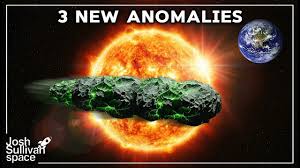
There are more major observed anomalies that cannot be explained and break known standard comet physics. It has unusually collimated (Laser-Like) tails. It has two distinct, extremely narrow tails. The tail going towards the Sun is tough to explain. It is about ~600,000 miles long. This is almost three times the distance from the Earth to the moon. There is a normal tail (away from Sun that is ~3 million miles long (5× longer than the sunward tail).
Tails remain tightly focused over millions of miles instead of diffusing (spreading out) like typical comets.
Multiple independent amateur and professional observations confirm these are real features.
Impossible Anti-Solar Tail
Material in the toward-Sun tail must fight directly against solar wind and radiation pressure. Harvard astrophysicist Avi Loeb calculated the density in the anti-tail would need to be ~1 million time denser than the solar wind itself. This is far beyond normal comet outgassing.
Stable Asymmetric Jet Structure Has Remained Constant for Weeks
The 5:1 tail length ratio has remained constant for weeks.
No wild fluctuations typical of rotating comets exposing different ice pockets.
Mechanism producing jets is remarkably steady over hundreds of millions of miles.
Mass Loss Far Too High for Distance and Surface Area
At 1.8–2 AU, solar energy is only ~300 W/m².
To explain observed mass loss via normal CO? ice sublimation would require ~620 square miles of actively sublimating surface at maximum efficiency.