










Breaking News
 The Strait of Hormuz Could Become America's Suez Moment
 Former Green Beret on Doomsday Prepping, Potential Revolution, and What to Do When Chaos Erupts
 Martin Armstrong's Financial Endgame: Why Money Won't Disappear,...
 Socialism Is Pure Inefficiency
Top Tech News
 Tesla Model 3 killer charges from 10 to 97% in just 9 minutes
 World-first unpowered DNA computer sets speed record
 I Power 5 Buildings Off-Grid. Here's How
 The US government is pushing hard to get a working nuclear fission reactor into space by late 2028
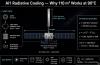 SpaceX Starmind AI in Space Radiator
 China Will Dominate Global Nuclear Energy Through 2035, Analyst Says
 These Absolutely Wild-Looking EVs Are Saudi Arabia's First Homegrown Cars
 BEYOND THE MOON: NASA plans a nuclear-powered fleet to push DEEPER into space
 Big Oil Backs Mazama's $135 Million Bet On Superhot Geothermal
 Quantum compass takes flight on Northrop's Lumberjack drone


SpaceX is approved to build 1 MILLION 'user terminals' that will connect people to...
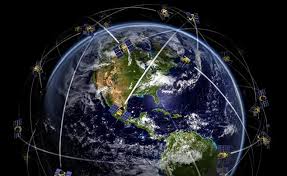
SpaceX is plowing ahead with its plans to beam high speed internet to Earth from a constellation of satellites.
This week, the Elon Musk-owned aerospace company received approval from the FCC to build 1 million user terminals on Earth that are meant to support its Starlink project - a constellation of mini satellites that will eventually beam high speed internet down to Earth.
The terminals will be able to receive signals from space and relay them to users on Earth.
According to the approval, SpaceX now has a 'blanket license for the operation of up to 1,000,000 fixed earth stations that will communicate with its non-geostationary orbit satellite system.'
As reported by CNET, Musk has said that terminals will look like a 'little UFO on a stick' that maneuver to catch the signals beamed down from the satellites.
Musk has also said that the terminals will be easy to install and can be 'plugged in and pointed at the sky.'
The approval is the next step in SpaceX says it plan to speckle low-Earth orbit with its mini satellites.