










Breaking News
 Is Big Pharma Selling Postpartum Depression to New Moms?
 Make Men Men Again: Low T Is Now a National Defense Problem
 Druski: They're Lying To You About Overnight Success!
 $6.27 Diesel Just Hit Harvest. The Grocery Aisle Hasn't Felt It Yet.
Top Tech News
 Tesla Model 3 killer charges from 10 to 97% in just 9 minutes
 World-first unpowered DNA computer sets speed record
 I Power 5 Buildings Off-Grid. Here's How
 The US government is pushing hard to get a working nuclear fission reactor into space by late 2028
 SpaceX Starmind AI in Space Radiator
 China Will Dominate Global Nuclear Energy Through 2035, Analyst Says
 These Absolutely Wild-Looking EVs Are Saudi Arabia's First Homegrown Cars
 BEYOND THE MOON: NASA plans a nuclear-powered fleet to push DEEPER into space
 Big Oil Backs Mazama's $135 Million Bet On Superhot Geothermal
 Quantum compass takes flight on Northrop's Lumberjack drone


Visit the 'most exclusive destination on earth'... for £710k: Tourists offered the chance...
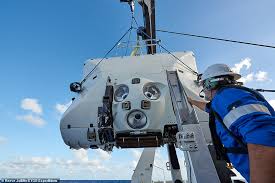
But for the first time, travellers are being offered the opportunity to explore its most extreme area - if they have a spare $750,000 (£710,000).
Isle of Man-based Eyos Expeditions is offering three members of the public the chance to tag along on a dive it's organising to the deepest spot in the Western Pacific trench, known as Challenger Deep - 35,853ft (10,928 metres/6.79 miles) beneath the surface. It is, the company says, the most exclusive destination on the planet.
The lucky three travellers will fly to the Pacific island of Guam. From there, they will board the expedition vessel, DSSV Pressure Drop, and spend a day at sea before reaching the Mariana Trench.
The expedition, which is set to take place in June, will then use a submersible vehicle called Limiting Factor to dive to the bottom of Challenger Deep.
The vehicle has been pressure-tested to 14,000 metres (45,931ft/8.69 miles) and has already dived to the bottom of the Mariana Trench five times.
Each guest will get an individual trip.
According to Eyos Expeditions, which has teamed up with Caladan Oceanic for the trip, the occupants of the submersible are completely protected by the 90mm-thick titanium sphere and 'experience no pressure changes or physiological stresses at all'.