










Breaking News
 15 Years After Occupy, the Case Against the System Has Never Been Clearer
 8 Prepper Hacks for Cleaning Without Running Water
 The Economy Is Stagnating
 Britain To Appoint A Dedicated Tax Agent To Every Single Billionaire
Top Tech News
 BEYOND THE MOON: NASA plans a nuclear-powered fleet to push DEEPER into space
 Big Oil Backs Mazama's $135 Million Bet On Superhot Geothermal
 Quantum compass takes flight on Northrop's Lumberjack drone
 Terrifying AI Behavior Even Its Creators Couldn't Explain
 WW3 Near-Miss? AI Hallucinated Nuclear Weapons Components Aboard Chinese Vessel Bound For Iran
 Stripe Is Building the Toll Road for the Machine Economy
 Toyota Dakar hopeful swaps twin-turbo V6 for hydrogen fuel cells
 4-min turbo-inflatable cubic camp castle is now available in the USA
 Researchers Used Claude To Hack OpenAI Employee Accounts
 Chinese Scientists Develop New Oil Refining Method That Cuts Energy Use by 90%



Make No Mistake: Military Robots Are Not There to Preserve Human Life...
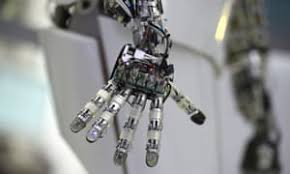
When human troops are replaced by robots on the battlefield, it won't be because the Pentagon's had some revelation about the value of human life – it'll be an effort to defuse anti-war protests by minimizing visible casualties.
US military commanders are itching to get their hands on some killer robots after an Army war game saw a human-robot coalition repeatedly rout an all-human company three times its size. The technology used in the computer-simulated clashes doesn't exist quite yet – the concept was only devised a few months ago – but it's in the pipeline, and that should concern anyone who prefers peace to war.
"We reduced the risk to US forces to zero, basically, and were still able to accomplish the mission," Army Captain Philip Belanger gushed to Breaking Defense last week, after commanding the silicon soldiers through close to a dozen battles at Fort Benning Maneuver Battle Lab. When they tried to fight an army three times their size again without the robotic reinforcements? "Things did not go well for us," Belanger admitted.