










Breaking News
 15 Years After Occupy, the Case Against the System Has Never Been Clearer
 8 Prepper Hacks for Cleaning Without Running Water
 The Economy Is Stagnating
 Britain To Appoint A Dedicated Tax Agent To Every Single Billionaire
Top Tech News
 Tesla Model 3 killer charges from 10 to 97% in just 9 minutes
 World-first unpowered DNA computer sets speed record
 I Power 5 Buildings Off-Grid. Here's How
 The US government is pushing hard to get a working nuclear fission reactor into space by late 2028
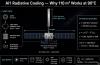 SpaceX Starmind AI in Space Radiator
 China Will Dominate Global Nuclear Energy Through 2035, Analyst Says
 These Absolutely Wild-Looking EVs Are Saudi Arabia's First Homegrown Cars
 BEYOND THE MOON: NASA plans a nuclear-powered fleet to push DEEPER into space
 Big Oil Backs Mazama's $135 Million Bet On Superhot Geothermal
 Quantum compass takes flight on Northrop's Lumberjack drone


1.2 Trillion Transistors on a Wafer-Scale AI Chip
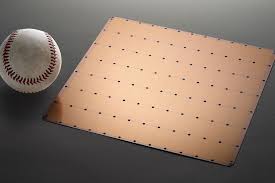
It is 56x larger than any other chip. It delivers more compute, more memory, and more communication bandwidth. This enables AI research at previously-impossible speeds and scale.
The Cerebras Wafer Scale Engine 46,225 square millimeters with 1.2 Trillion transistors and 400,000 AI-optimized cores.
By comparison, the largest Graphics Processing Unit is 815 square millimeters and has 21.1 Billion transistors.
Andrew Feldman and the Cerebras team have built the wafer-scale integrated chip. They have successfully solved issues of yield, power delivery, cross-reticle connectivity, packaging, and more. It has a 1,000x performance improvement over what's currently available. It also contains 3,000 times more high speed, on-chip memory, and has 10,000 times more memory bandwidth.
It has a complex system of water-cooling. It uses an irrigation network to counteract the extreme heat generated by a chip running at 15 kilowatts of power.