










Breaking News
 "Begin Preparing Yourself..." - Jeffrey Sachs
 The 5-Year Treasury Just Broke 5%... The Whole Curve Is Next
 ICE Denounced for Enacting 'Official Government Policy of Disappearing People'
 Google Just Told Canadian Adults: Give Us Your ID and a Selfie Or Else…And It's Starting Now!!
Top Tech News
 Tesla Model 3 killer charges from 10 to 97% in just 9 minutes
 World-first unpowered DNA computer sets speed record
 I Power 5 Buildings Off-Grid. Here's How
 The US government is pushing hard to get a working nuclear fission reactor into space by late 2028
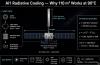 SpaceX Starmind AI in Space Radiator
 China Will Dominate Global Nuclear Energy Through 2035, Analyst Says
 These Absolutely Wild-Looking EVs Are Saudi Arabia's First Homegrown Cars
 BEYOND THE MOON: NASA plans a nuclear-powered fleet to push DEEPER into space
 Big Oil Backs Mazama's $135 Million Bet On Superhot Geothermal
 Quantum compass takes flight on Northrop's Lumberjack drone


Engineering tour de force births programmable optical quantum computer

There comes a moment in every physicist's life when they think the unthinkable: I wish I were an engineer. I suspect this thought crossed the minds of the 14-odd physicists involved in creating a key demonstration of the scalability of quantum computing using light.
At the moment, if you had to bet on the technology most likely to win the quantum computing race, most people would put their chips on a spread of superconducting rings. But I'd put the house and kids on light. Why? Because lasers make everything better. More seriously, quantum computing architectures based on superconducting devices have made remarkable progress in the last five to ten years. By contrast, progress on the light front has been ominously slow. But it should be easier to work with light-based qubits if we can ever get them off the ground.