










Breaking News
 Globalism Must Be Vanquished
 The Philosophy of Self-Governance
 Morocco Convicts Individuals for Ceuta Invasion
 THE OCCULT: Alex Jones Unravels The Truth Behind The Mystery Schools And The Freemasons...
Top Tech News
 What could possibly go wrong? Scientists use AI to design new viruses
 Dual-motor suitcase drive underpins 3,000-hp hypercar
 DoorDash Wins Federal Approval To Fly Its Own Delivery Drones
 Shade-Resistant Solar Cells Retain 97% Efficiency After 2,000 Hours of Testing
 20 Ancient Engineering SECRETS
 Stonehenge Was Reanalyzed by AI -- And the Findings Are Hard to Explain
 After Years Of Delays, Aptera Is Finally Preparing To Build Customer Cars
 'When you kill it, it doesn't die': the jellyfish that has cracked the secret of immorta
 Archer Aviation debuts Halo autonomous VTOL, Thunder's commercial twin
 US Telecoms Slide On Starlink Mobile Threat; Bernstein Sees It As A "Jab, But No Knockout Yet**



Out of bullets, US will have to adjust and change security policy
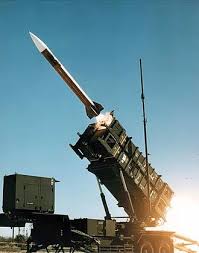
?While President Trump says the US is not short of weapons, he has told Ukrainian President Vladimir Zelensky that the US does not have Patriot interceptors to send to Ukraine because "we need them for ourselves."
The best face to put on the situation is that some in the Pentagon leaked information that US stockpiles of critical weapons were dangerously depleted. The urgency in the leak came from the possible renewal of hostilities against Iran and the fear that it would become close to impossible to defend against Iranian missile and drone strikes if supplies ran out.
Others think the leaks were inspired by Iran war opponents trying to scuttle a decision to resume attacks against Iran.
In any case, the metrics are the metrics and they are not good.
The supply shortage in the Iran war took place because US production of weapons fell behind current needs. The US emptied its war supplies supporting Ukraine, without accounting for what would happen if the shelves were empty.
Two of the most important land-based air defense systems, THAAD and Patriot, reportedly are in dangerously short supply. US and allied forces have expended close to 80% of total US THAAD interceptor stocks relative to pre-war inventory levels.
At least two to three AN/TPY-2 X-band radars – the primary radar component for the THAAD system – have been confirmed damaged or destroyed in Middle Eastern host countries following Iranian targeted strike operations including those at
the Muwaffaq Salti Air Base (Jordan) where a US Army forward-deployed AN/TPY-2 radar was destroyed by a drone strike;
the Prince Sultan Air Base (Saudi Arabia), where high-resolution satellite imagery confirmed an AN/TPY-2 radar array and its support shelter sustained heavy fire damage from a precision strike, disabling the unit's tracking capabilities; and
the UAE's al-Ruwais where additional strikes targeted radar facilities tied to the regional THAAD network near al-Ruwais, causing operational degradation.
Meanwhile, Patriot air defense systems operated by US and allied forces have sustained both physical damage and operational degradation.
In Bahrain, satellite imagery confirmed that Iranian precision strikes hit and destroyed key components of a US-supplied Patriot battery at Riffa Air Base, alongside damage to hardened structures at the site.
Defense assessments (including analysis by the Center for Strategic and International Studies) highlight that coalition forces expended approximately 65% of their total PAC-2 and PAC-3 interceptor inventories. The US entered recent operations in the Middle East with an estimated total of over 2,300 to 2,500 PAC-3 interceptors. Over 1,500 PAC-3 interceptors have been expended in defense against ballistic missiles and drone salvos, maybe more.