










Breaking News
 The current "UFO/UAP disclosure" campaign is not a grassroots or independent effort.
 Scientists Discover A 113-million-year-old Pterosaur Wing Preserved In Extraordinary Detail
 States Finally Begin to Roll Back Free Healthcare for Illegal Aliens
 Trump's ready to reopen mental institutions and liberals are furious…
Top Tech News
 Heads up: Apparently the government is hiding cameras inside fake utility boxes
 Sodium Batteries And EVs That Power The Grid: Inside GM's Big Energy Push
 NUCLEAR ENGINE - UNLIMITED LUXURY - 20 YEARS WITHOUT REFUELING
 China Unveils Nuclear-Powered Floating Hub For Green Shipping
 China Launches World's 1st Commercial Brain Chip, Beating Elon Musk's Neuralink!
 Modular next-gen US nuclear reactor goes critical
 How EMF's cause disease
 This Company Will Add Phone, AirPod, and Smartwatch Trackers to License Plate Readers
 Elon Details SpaceX AI Data Center in Space Details and Roadmap
 5-in-1 miniature surgical robot is the size of a seed


Scientists Discover A 113-million-year-old Pterosaur Wing Preserved In Extraordinary Detail
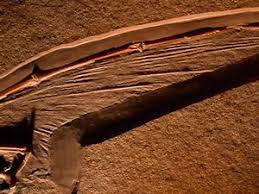
A 113-million-year-old pterosaur wing bone has been found in northeastern Brazil. The fossil, described in a study published in iScience, doesn't just preserve bone structure; it also contains chemical traces that hint at what the animal ate and how it was buried. According to Curtin University, it's a rare case where anatomy and chemistry survive together after more than 100 million years.
Pterosaurs were flying reptiles that lived alongside dinosaurs and were among the first vertebrates to master powered flight. Some had wingspans reaching up to 12 meters, and their hollow bones made them lightweight in life but tricky in death. Those same hollow structures sometimes helped preserve them in unusual ways when conditions were just right on the seabed.
What stands out here is how much information survived. Most fossils of this age lose all original biological signals, yet this one still carries molecular leftovers.
A Wing Bone That Kept More Than Its Shape
The fossilized wing phalanx is preserved in three dimensions, meaning it didn't collapse flat under sediment pressure like many ancient bones do. As mentioned in the study, this kind of preservation gives researchers a clearer view of the original structure, down to fine anatomical details that are usually lost over time.
Even more surprising, scientists detected steroid molecules inside the fossil. Lead author Kliti Grice, a John Curtin Distinguished Professor, put it simply:
"This fossil is a true time capsule—not only is it beautifully preserved, but for the first time we've detected traces of steroids in a pterosaur, providing further evidence that these creatures likely fed on fish or squid," she said.
Those molecules matter because they're extremely rare. Organic compounds usually break down long before fossils reach this age. Their survival here suggests that something in the burial environment slowed or redirected the usual decay process, locking in traces of the animal's biology.
Chemical Traces Inside a Pterosaur Wing
After the pterosaur died and sank to the seabed, it didn't just decay in a simple way. Instead, microbes took over, reshaping the chemistry around the body. The study explains that sulfur-oxidising bacteria played a key role in this process.