










Breaking News
 UPDATE: Netanyahu Declares Israel Will Not Comply With Lebanese Portion Of Peace Deal
 At Least Five Killed as Israel Continues To Pound Southern Lebanon
 America's Hidden Food Crisis and the Fear of Confiscation
 Trump: Iran Deal to Be Inked on Sunday Ahead of G7
Top Tech News
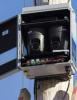 Heads up: Apparently the government is hiding cameras inside fake utility boxes
 Sodium Batteries And EVs That Power The Grid: Inside GM's Big Energy Push
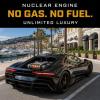 NUCLEAR ENGINE - UNLIMITED LUXURY - 20 YEARS WITHOUT REFUELING
 China Unveils Nuclear-Powered Floating Hub For Green Shipping
 China Launches World's 1st Commercial Brain Chip, Beating Elon Musk's Neuralink!
 Modular next-gen US nuclear reactor goes critical
 How EMF's cause disease
 This Company Will Add Phone, AirPod, and Smartwatch Trackers to License Plate Readers
 Elon Details SpaceX AI Data Center in Space Details and Roadmap
 5-in-1 miniature surgical robot is the size of a seed


Sodium Batteries And EVs That Power The Grid: Inside GM's Big Energy Push

In addition to being America's largest automaker by sales, General Motors is becoming a burgeoning energy company.
At an event in San Francisco I attended on Tuesday, GM said it's developing sodium-ion batteries for energy storage systems (ESS). It also wants to connect 52,000 EVs to the grid by the end of the decade and make EV charging dramatically simpler for owners with a new tool called Energy Pass, which consolidates charging and payments across major networks into a single app.
GM's Bet On Sodium-Ion Batteries
But first, let's talk about sodium-ion. GM's broader battery strategy has branched out under Kurt Kelty, a Tesla veteran who serves as the automaker's vice president of battery and sustainability.
It has lithium iron phosphate (LFP) for affordable EVs like the Chevy Bolt and near-term energy storage projects, traditional high-nickel (NMC) cells for most current models, and the upcoming lithium-manganese-rich (LMR) chemistry to bring down costs on big electric trucks and SUVs. Sodium-ion is the newest addition to that lineup.
"We believe that you have to have the right battery for the right application," Kelty told me in an interview.
Why Car Companies Are Getting Into Energy Storage
EV sales have cooled in the U.S. now that federal tax credits have expired, and automakers that poured billions into domestic EV battery production are looking for somewhere else to put that capacity to work. Grid-scale energy storage is the obvious answer. Demand is enormous, driven largely by power-hungry AI data centers.
ESS batteries can store surplus renewable energy and release that energy when demand spikes. In this market, the race is on to deliver the best battery at the lowest cost, with minimal maintenance and a long service life.