










Breaking News
 SPLC 'Fascism Expert' Funneled $1.2 MILLION in Donor Cash to Her Neo-Nazi Informant/Lover
 Israeli Ministers Say Israel Isn't Bound by US-Iran Deal, Won't Withdraw From Lebanon
 EXCLUSIVE: Top FBI Whistleblower Says The Supposed Terror Plot Targeting The White House...
 Heterofatalism
Top Tech News
 Heads up: Apparently the government is hiding cameras inside fake utility boxes
 Sodium Batteries And EVs That Power The Grid: Inside GM's Big Energy Push
 NUCLEAR ENGINE - UNLIMITED LUXURY - 20 YEARS WITHOUT REFUELING
 China Unveils Nuclear-Powered Floating Hub For Green Shipping
 China Launches World's 1st Commercial Brain Chip, Beating Elon Musk's Neuralink!
 Modular next-gen US nuclear reactor goes critical
 How EMF's cause disease
 This Company Will Add Phone, AirPod, and Smartwatch Trackers to License Plate Readers
 Elon Details SpaceX AI Data Center in Space Details and Roadmap
 5-in-1 miniature surgical robot is the size of a seed


Heterofatalism
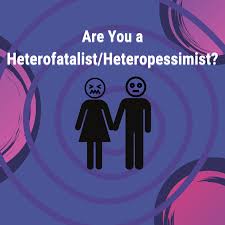
But many laws and tax-funded policies today reflect "social justice" that prioritizes secondary characteristics over the primary one of a shared humanity. Being black, homosexual, or trans becomes far more politically important than being an individual. Since the goal of social justice is to "equitably" redistribute status and wealth throughout society, there has been a forced transfer of power from those with secondary characteristics viewed as oppressive — such as heterosexuality — to those with ones viewed as victimized — such as being transgendered. Society becomes balkanized, with one class of people automatically in conflict with others.
An overdue backlash against social justice has created an odd phenomenon: heterosexual politics. Heterosexual issues include biological males competing in female sports, men being housed in women's prisons, and and boys using girls' washrooms. The cultural confrontations can be laughable, like the media frenzy caused last year by Sydney Sweeney's jean ads; they can also be life-and-death, like the transitioning of minor children through irreversible surgery, sometimes without parental consent or knowledge.
A fresh development is pushing this backlash along. In 2019, sexuality scholar Asa Seresin coined the term 'heteropessimism' to describe what he considers to be a rising phenomenon among straight women; they are sexually fed up with men, he claims, even though women still desire men. Seresin's term has morphed into "heterofatalism," which describes the belief that heterosexual relationships are unequal, unsatisfying, and doomed. This drift has political, cultural, and moral implications that are important to explore. Appreciating them, however, may require a visceral example.
On June 20, 2025, New York Times Magazine published a heterofatalist article entitled "The Trouble With Wanting Men" by freelance writer Jean Garnett; as the New York Post observes, the article "has gone viral." What exactly is the trouble, according to Garnett? Men themselves. The entire category of men or maleness. Indeed, Garnett writes, "the petulantly proud masculinist subcultures that have arisen" are not the men about whom "my friends and I are feeling bleak…. It's the sweet, good ones. Dammit." All men are the problem.
This problem is called women's reality. Garnett explains,
If the experts say my romantic letdowns have some larger social significance, I am not going to argue. The men I want are not wanting me badly enough, not communicating with me clearly enough, not devoting themselves to me: All this certainly seems calamitous enough to warrant an "ism." And if it is an "ism," the problem cannot be me. It must be men, right? Men are what is rotten in the state of straightness