










Breaking News
 The SPLC's Real Scam
 Russia Is Single-Handedly Standing Against The West: Putin
 Public Schools Are In A Downward Spiral
 "Flying Beer Cooler": Pentagon's Next Kamikaze Drone Ushers In Era Of Cheap Mass-Produ
Top Tech News
 NUCLEAR ENGINE - UNLIMITED LUXURY - 20 YEARS WITHOUT REFUELING
 China Unveils Nuclear-Powered Floating Hub For Green Shipping
 China Launches World's 1st Commercial Brain Chip, Beating Elon Musk's Neuralink!
 Modular next-gen US nuclear reactor goes critical
 How EMF's cause disease
 This Company Will Add Phone, AirPod, and Smartwatch Trackers to License Plate Readers
 Elon Details SpaceX AI Data Center in Space Details and Roadmap
 5-in-1 miniature surgical robot is the size of a seed
 Every hard drive you own will die.
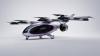 Flying car industry turns to solid-state batteries for commercial takeoff



"Flying Beer Cooler": Pentagon's Next Kamikaze Drone Ushers In Era Of Cheap Mass-Produ

Our focus on the rise of the "war unicorn" theme over the last four months, shaped by technological innovation seen in the war in Ukraine and the conflict in the Middle East, has allowed us, in countless notes, to inform readers very early that 2030s warfare has already arrived. In fact, hyperinnovation in Ukraine, now the world's AI weapons laboratory, is what pulled forward these extremely advanced, low-cost weaponry.
Modern battlefields are now defined by low-cost robotics, whether on the ground, at sea, or in the air, as well as drones, other autonomous systems, and AI-enabled kill chains. Meanwhile, the Department of War's shift toward funding and procuring from defense startups, rather than solely from big defense primes, thanks to DOGE, has accelerated the U.S.'s ability to spur a boom in the defense universe as President Trump's broader war economy ramps up, mainly for stockpiling reasons.
Let's not forget our view in late January, when nearly all of Wall Street was misguided on alleged water and climate threats from data centers, completely missed that with hundreds of billions of dollars in data center buildouts by hyperscalers, now around $800 billion this fiscal year, these facilities had, and still have, a missing layer of air defense against FPVs and fiber-optic one-way attack drones.
We warned at the time:
Explosion In AI Data Center Buildouts Will Demand Next-Gen Counter-Drone Security
Then noted:
"Detect, Track, Neutralize": Autonomous Turrets With Low-Cost Firepower To Counter Kamikaze Drones
In fact, it only took two Iranian attacks targeting Gulf-area data centers with Shahed drones to become a major wake-up call to Wall Street and private equity about the urgency of understanding this threat and how to capitalize.
More importantly, it triggered the urgent need for private equity to begin raising capital for war unicorns that will eventually become major suppliers of interceptors, counter-UAS products, and much more, because much of America's critical infrastructure, data centers, and the list goes on and on, remains entirely exposed to FPVs.
We understand that multiple private equity funds, each with billions of dollars in AUM, have sent personnel to Ukraine to assess the investment landscape across FPV drone, counter-drone, passive acoustic threat detection, and battlefield AI companies. That alone underscores how quickly the "war unicorn" theme is being adopted on Wall Street, one set to surge in the coming quarters.