










Breaking News
 "The World Is Losing Trust": Foreign Investment In Germany Plunges To Lowest Level Since 2
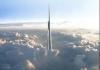 The Race To Build The World's Tallest Skyscraper
 At Last Minute, SEC Suddenly Delays Plan To Allow Crypto Versions Of US Stocks
 Debt Remembered And Debt Ignored
Top Tech News
 Cars Are Fast Becoming Dystopian Prison Pods...
 Our Emergency Water Plan Wasn't Good Enough - So We Built This
 Sodium Ion Batteries Can Reach 100 Gigawatt Per Hour Per Year Scale in 2027
 Juiced Bikes proves capable electric motorcycles don't have to cost a lot
 Headlight projectors turn your car into a drive-in theater
 US To Develop Small Modular Nuclear Reactors For Commercial Shipping
 New York Mandates Kill Switch and Surveillance Software in Your 3D Printer ...
 Cameco Sees As Many As 20 AP1000 Nuclear Reactors On The Horizon
 His grandparents had heart disease.
At 11, Laurent Simons decided he wanted to fight aging.
His grandparents had heart disease.
At 11, Laurent Simons decided he wanted to fight aging.
 Mayo Clinic's AI Can Detect Pancreatic Cancer up to 3 Years Before Diagnosis–When Treatment...



The Race To Build The World's Tallest Skyscraper
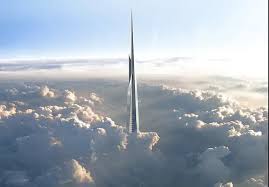
This timeline, via Visual Capitalist's Gabriel Cohen, shows every building to hold the title of world's tallest since 1909, using the most recent data available from the Council on Vertical Urbanism (CVU).
New York's Skyscraper Boom
For most of the 20th century, the U.S. housed the world's tallest building. New York in particular held the crown, with the Big Apple producing back-to-back skyscraper marvels from 1909 to 1972.
The Metropolitan Life Tower, constructed in New York's Flatiron District, topped out at 700 feet in 1909. Within a few years, it would be surpassed by Tribeca's Woolworth Building (792 feet), which itself lost the title by the late 1920s with the arrival of the Art Deco icon known as the Chrysler Building (1,046 feet).
The table below lists the world's tallest buildings between 1909 and 2026.

The Chrysler Building, found in East Midtown, opened in 1930 as the world's first supertall skyscraper. At the time, developers were racing to build the world's tallest building, and the Chrysler Building famously beat rival 40 Wall Street by secretly assembling a 125-foot spire inside the tower before raising it into place after 40 Wall Street was completed.
The Chrysler Building's victory was short-lived. In 1931, the Empire State Building (1,250 feet) opened and promptly became the world's tallest building by a significant margin. However, Depression-era economic slowdowns caused abysmal tenancy rates in the new supertall skyscraper, which was popularly derided as the "Empty State Building" in the mid-1930s.
The Twin Towers and Chicago's Resurgence
The Empire State Building maintained its position until the completion of the Twin Towers in New York's Financial District in 1972. At that time, One World Trade Center, commonly known as the North Tower, took the title at over 1,368 feet, standing a few feet taller than its South Tower counterpart. The two towers would eventually be destroyed in the September 11 attacks of 2001.
Chicago, the birthplace of the modern skyscraper, reemerged as a dominant player in tall buildings with the 1974 opening of the Sears Tower (1,451 feet), named for the retailer headquartered there. The building held the title of world's tallest for nearly a quarter-century, although it was renamed in the 2000s after British insurance broker Willis Group Holdings.
In the late 1990s, the Petronas Towers opened in the Malaysian capital of Kuala Lumpur at 1,483 feet, marking the first time in decades that the world's tallest building was not located in the United States. Similar to the Chrysler Building nearly 70 years earlier, the Petronas Towers' spires made the difference, much to Chicagoans' dismay.
How Asia Took Over the Skyscraper Race
Since the Petronas Towers, the world's tallest building has remained in Asia, albeit in different regions. TAIPEI 101, in the Taiwanese capital, held the title following its completion in 2004 at 1,667 feet. A few years later, Dubai's Burj Khalifa opened at a staggering 2,717 feet tall.