










Breaking News
 California Lawmakers Introduce The "Stop Nick Shirley Act"
 This Home Costs $300 to Build and $0 to Heat FOREVER. Why Is It Banned?
 Think the Iran war is a disaster? Blame these DC think tanks first.
 What's Wrong With Trump?
Top Tech News
 The Most Dangerous Race on Earth Isn't Nuclear - It's Quantum.
 This Plasma Stove Cooks Hotter Than The Sun
 Energy storage breakthrough traps sunlight in a molecule
 Steel rebar may have met its match – in the form of wavy plastic
 Video: Semicircular wings give Cyclone VTOL a different kind of lift
 After 20 Years, Wave Energy Finally Works
 FCC Set To "Supercharge" Starlink Space Internet With "Seven-Fold More Capacity"
 'World's First' Humanoid Robot For Real Household Chores Launched With 16-Hour Battery
 XAI Training 10 Trillion Parameter Model – Likely Out in Mid 2026
 The $7 Powder That Beats Your $5,000 AC Unit!



Think the Iran war is a disaster? Blame these DC think tanks first.
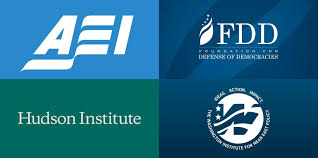
If the U.S.-Israeli war against Iran is ultimately assessed as a defeat, some measure of blame could be cast on five pro-Israel "think tanks" that consistently promoted military action against the Islamic Republic in the eight months before it began, according to analyses by four different widely used AI programs.
The Foundation for Defense of Democracies (FDD), the American Enterprise Institute (AEI), the Hudson Institute, and the Washington Institute for Near East Policy (WINEP) ranked among the top six think tanks identified by the AI models as the "most prominent in promoting military action against Tehran" during the period between the "Twelve-Day War" in June 2025 and the current war's launch on February 28.
A fifth think tank, the more traditionally right-wing Heritage Foundation, was also included by three of the apps as among the top six think tanks promoting military actions against Iran.
Unsurprisingly, four platforms – Gemini, ChatGPT, Claude, and Grok – identified the same five Washington-based institutions as also having played leading roles in promoting the U.S. invasion of Iraq 23 years ago.
Of the five, FDD, AEI, Hudson, and WINEP fall squarely into the neoconservative camp of U.S. foreign policy hawks in that support for Israel is a central principle of their world views and work. Indeed, the organization that claimed the top spot for prominence in promoting war against Iran in all four AI apps was FDD, whose original submission to the IRS in 2001 described its mission as "provid(ing) education to enhance Israel's image in North America and the public's understanding of issues affecting Israeli-Arab relations."
The Heritage Foundation — which identifies itself as pursuing an "America First" foreign policy — has long promoted close ties with Israel. A "Special Report" published by Heritage in March 20025 called for transforming U.S.-Israeli relations from a mere "special relationship" to a "strategic partnership."
"Experts" from all five organizations repeatedly propounded some or all of the same themes — that Iran's nuclear program and missile arsenal posed an unacceptable threat to Israel and eventually to the U.S. homeland, that the regime was still "the world's leading state sponsor of terrorism," and that it was at the weakest point since the 1979 Revolution.
They pressed these points in congressional testimony, on the op-ed and news pages of major print and online publications, in broadcast television and radio interviews, and on social media, notably X, in what were clearly efforts to persuade elites and the public to accept the necessity of military action against the Islamic Republic. These arguments echoed the same themes as those propagated by Israeli Prime Minister Benjamin Netanyahu, as well as well-known pro-Israel hawks in the U.S. Congress, such as Sen. Lindsey Graham, in their appearances on U.S. broadcast media.
As can be seen in the table below, three of the AI apps identified several additional neoconservative-led think tanks among the six most prominent promoters of military action, including the Jewish Institute for National Security of America (JINSA), the Center for Security Policy (CSP), and the Institute for the Study of War (ISW), which was founded by neoconservative military analyst Kimberly Kagan in 2007. "While ISW positions itself as analytical rather than explicitly advocacy-oriented, its framing of Iranian threats consistently supported the case for military actions," according to Claude.
Over the past quarter century, the foreign policy orientation of FDD, AEI, Hudson, JINSA, and CSP has been hardline neoconservative; their positions, particularly with respect to the Middle East, have generally reflected the views of Netanyahu's Likud Party. WINEP, which was created in 1985 as a spin-off of the American Israel Public Affairs Committee, hosts fellows with a more diverse range of views, especially regarding Israeli-Palestinian relations.