










Breaking News
 Iran Says It Launched Attacks on US Bases in Kuwait, UAE
 Israel's Ben Gvir Unveils Plan To Remove All Palestinians From Gaza
 A Nation of Technoserfs
 Celebrate! UN admits UN climate pacts worthless!
Top Tech News
 Floating data center would provide water and electricity to 32,000 homes
 OpenAI Cuts Off Elon's Cursor, Humanity's First Star Probe, and Trump's Nuclear Mars Shi
 Eating pollution? Plastic-to-cookie technology raises safety, environmental concerns
 Ford's $30,000 Fathom EV Truck Appears More Conventional Than Expected
 Berlin-based artist Simon Weckert explored that idea with Digital Camouflage...
 Tether expands tokenization business into Saudi Arabia, starting with real estate
 Ukraine is facing a new problem in its war with Russia:
 It charges more than it discharges while driving
 Dataminr AI tech to go live on NATO Maven system: CEO
  The Most Dangerous Interview Ever Recorded? PART 2


Steel rebar may have met its match – in the form of wavy plastic
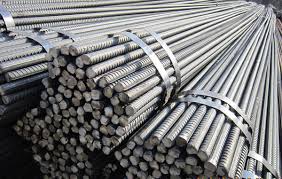
Wrong. Researchers at the University of Sharjah, UAE, have discovered that plastics, in certain shapes, may perform as well as steel bars as reinforcement materials in concrete.
In a study that was as much about the shape of the material as the material itself, the researchers 3D-printed and tested various material configurations, finding that certain shapes outperformed others by up to 500% in specific tests.
Concrete, which primarily comprises cement, water, and aggregates, is the most used construction material in the world. This composite is often upgraded with steel reinforcement to a stronger version called reinforced concrete.
Over the past century, steel has proven to be a highly effective concrete reinforcement material, so much so that more than 20% of the almost 2 billion tonnes of global steel produced annually is used to reinforce concrete.
Now, despite its celebrity and effectiveness, steel presents numerous drawbacks. For starters, it is heavy. A cubic yard of reinforced concrete typically contains 150 to 250 pounds (68 to 113 kg) of steel; figures can rise to well over 300 lb (136 kg) in heavily reinforced applications. Steel is also susceptible to corrosion, which can compromise structural integrity over time.
Finally, steel has an enormous environmental footprint. Its production, from mining and refining to shaping, transporting, and assembling, requires enormous amounts of energy. This energy-intensive process contributes significantly to greenhouse gas emissions, making steel one of the most carbon-intensive materials in construction.
Given all these downsides, researchers have been developing alternative reinforcement materials, such as glass fiber-reinforced polymers and carbon fiber-reinforced polymers, for years.
The University of Sharjah researchers turned to a far more accessible but less likely material: polylactic acid (PLA), a biodegradable thermoplastic. In the study, the researchers focused not only on the material but also on the shape of the reinforcements.
Cylindrical bars have been the go-to shape for both steel and its alternatives. But what do other shapes have to offer? This is one of the major questions the researchers set out to answer.
Using 3D printing, they produced flat, platelike structures and wavy, serrated, and triangular patterns designed to grip the concrete more effectively and improve stress transfer. They then tested these shapes against traditionally straight PLA bars. The findings were outstanding, with the unconventional shapes significantly outperforming more traditional bars.
"Plates outperform bars. Beams reinforced with PLA plates achieved up to twice the peak load capacity and absorbed up to five times more energy (toughness) than those using simple PLA bars. The increased surface area of the plates allowed for a much stronger bond with the concrete," explained Dr. Muhammad Junaid, head of the research.