










Breaking News
 Melania Trump Denies Ties to Epstein. Former Brazilian Model Threatens to Expose Mrs. Trump
 Iran war as a cage Trump can't escape
 Blockading The Blockade?
 Iran's Determination to Break Out From the Panopticon of Western 360° Containment
Top Tech News
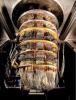 The Most Dangerous Race on Earth Isn't Nuclear - It's Quantum.
 This Plasma Stove Cooks Hotter Than The Sun
 Energy storage breakthrough traps sunlight in a molecule
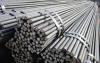 Steel rebar may have met its match – in the form of wavy plastic
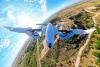 Video: Semicircular wings give Cyclone VTOL a different kind of lift
 After 20 Years, Wave Energy Finally Works
 FCC Set To "Supercharge" Starlink Space Internet With "Seven-Fold More Capacity"
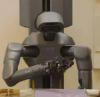 'World's First' Humanoid Robot For Real Household Chores Launched With 16-Hour Battery
 XAI Training 10 Trillion Parameter Model – Likely Out in Mid 2026
 The $7 Powder That Beats Your $5,000 AC Unit!



Video: Semicircular wings give Cyclone VTOL a different kind of lift
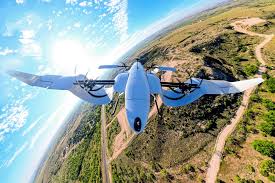
In 1925, a man named Willard Ray Custer had an interesting idea. Instead of getting an airplane to move at rapid speeds to create lift on its wings, why not move air over the wing using a propeller? So instead of pushing an entire plane through the air to get it skyward, you in effect, bring the air to the wings.
A few years later, Custer patented his design for a channel wing. This design, which features propellers set into a half-circle channel on each wing, provided planes shorter take-off distances thanks to lift at slower airspeeds. To demonstrate this, Custer had a man run alongside one of his channel wing planes until it lifted off the ground. In another test, Custer's team strapped the plane down, and turned on the propellers. The resultant lift the craft exhibited is probably the first instance of plane taking off vertically.
Unfortunately, Custer never found a way to make channel wings commercially viable. Planes back then were simply too heavy to make the system efficient.


