










Breaking News
 Will China Retaliate Against Donald Trump's Oil Blockade and Force an American Surrender?
 There can be no peace in the Middle East as long as the Zionist agenda of greater Israel rules
 Elon Musk Reveals Covid Vaccine Injury After Former Pfizer Official Admits Shots Likely Killed...
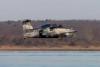 Autonomous wing-in-ground effect aircraft has US military in its sights
Top Tech News
 The Most Dangerous Race on Earth Isn't Nuclear - It's Quantum.
 This Plasma Stove Cooks Hotter Than The Sun
 Energy storage breakthrough traps sunlight in a molecule
 Steel rebar may have met its match – in the form of wavy plastic
 Video: Semicircular wings give Cyclone VTOL a different kind of lift
 After 20 Years, Wave Energy Finally Works
 FCC Set To "Supercharge" Starlink Space Internet With "Seven-Fold More Capacity"
 'World's First' Humanoid Robot For Real Household Chores Launched With 16-Hour Battery
 XAI Training 10 Trillion Parameter Model – Likely Out in Mid 2026
 The $7 Powder That Beats Your $5,000 AC Unit!



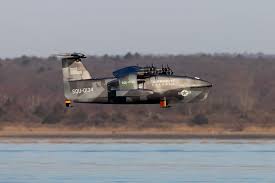
Autonomous wing-in-ground effect aircraft has US military in its sights
If you've been following the news out of military circles lately, one thing that stands out as a common trend is that the Western powers are reacting to the current geopolitical situation by initiating major rearmament drives intended to not only reequip and modernize their forces, but to do so as fast as possible.
Part of this effort involves not only investing in flashy things like lasers and missiles or vitally mundane tasks like building up stockpiles of munitions and spares, it also includes adapting new or previously overlooked technologies to speed up and improve the resilience of logistical systems that keep soldiers supplied in the field.
REGENT's Squire project combines three technologies in hopes of giving the US military an advantage in the logistical realm – autonomous flight systems, Wing-in-Ground (WIG) Effect, and electric propulsion.
Since 2020, the company has been working on an electric fixed-wing aircraft that exploits the WIG Effect to create a craft that flies at an altitude that is about equal to or less than half the length of its wingspan. When it does this, drag is reduced significantly as the proximity to the ground disrupts the formation of vortices at the wingtips. However, the party piece is that the air trapped under the wing creates a high-pressure cushion effect with a lift-to-drag ratio beyond that of a conventional aircraft.
The upshot is that a WIG aircraft can carry heavier payloads over greater ranges than conventional craft as it skims over open ground or water. This is especially important for electrically powered craft that have notoriously short range.