










Breaking News
 Melania Trump Denies Ties to Epstein. Former Brazilian Model Threatens to Expose Mrs. Trump
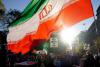 Iran war as a cage Trump can't escape
 Blockading The Blockade?
 Iran's Determination to Break Out From the Panopticon of Western 360° Containment
Top Tech News
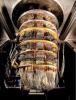 The Most Dangerous Race on Earth Isn't Nuclear - It's Quantum.
 This Plasma Stove Cooks Hotter Than The Sun
 Energy storage breakthrough traps sunlight in a molecule
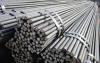 Steel rebar may have met its match – in the form of wavy plastic
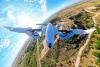 Video: Semicircular wings give Cyclone VTOL a different kind of lift
 After 20 Years, Wave Energy Finally Works
 FCC Set To "Supercharge" Starlink Space Internet With "Seven-Fold More Capacity"
 'World's First' Humanoid Robot For Real Household Chores Launched With 16-Hour Battery
 XAI Training 10 Trillion Parameter Model – Likely Out in Mid 2026
 The $7 Powder That Beats Your $5,000 AC Unit!



Iran war as a cage Trump can't escape
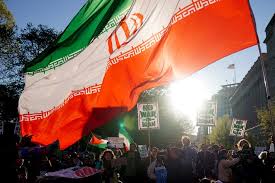
Six weeks into what the Trump administration has branded "Operation Epic Fury," it is worth pausing to ask the question that Washington's war managers seem constitutionally incapable of posing to themselves: what exactly did we think was going to happen next?
The opening salvo killed Supreme Leader Ali Khamenei and triggered a torrent of hundreds of retaliatory missiles and thousands of drones from Iran across the region, leaving enormous damage, thousands dead in Iran and Lebanon, dozens dead in Israel and the Gulf Arab states, and millions of people displaced.
The Strait of Hormuz — through which, as every schoolchild in a petroleum-dependent economy now knows, roughly a fifth of global oil and gas flows — has become a theater of war.
And after 21 hours of marathon talks in Islamabad — the highest-level direct engagement between Washington and Tehran since the 1979 Islamic Revolution — the two sides departed without an agreement.
This is where we find ourselves on day 44. So let us, with the cold sobriety the moment demands, survey the options before the United States.
Option one: blockade and maximum pressure, doubled down
The US military's Central Command announced that a naval blockade of Iranian ports would begin at 10 a.m. ET on Monday. This is the maximalist path — the logic that what has failed must simply be applied with greater force.
I have heard this argument before. I heard it in 2003 when the architects of Iraq's liberation assured us that Saddam's removal would trigger democratic dominoes across the Arab world.
I heard it again in the Afghanistan endgame, when another administration convinced itself that one more surge, one more deadline, would produce the capitulation that had eluded us for two decades. Maximum pressure has a stubborn empirical record: it maximizes suffering and minimizes strategic results.
Oil prices have already gained over 31% since the war began, and a global energy expert warned that elevated prices could persist through the end of 2026 even after hostilities cease — because the damage to infrastructure and the disruption of shipping lanes will not be repaired overnight.
A naval blockade does not merely squeeze Tehran; it squeezes Tokyo, Seoul, Berlin, and New Delhi. It squeezes the American consumer at the pump. It hands Beijing, which has been quietly positioning itself as the indispensable mediator, a geopolitical gift wrapped in an oil drum.
And what of Iran itself? The regime, for all the genuine grievances of its people — and those grievances are real and deep — has now been handed the most powerful gift any authoritarian government can receive: a foreign enemy.
Ask yourself the question that seems to have eluded our war planners: when foreign powers bomb your cities, assassinate your supreme leader, and blockade your ports, do you rally against your government or against the foreigners doing the bombing?