










Breaking News
 Next Issue Of The Wild Bunch: What If You Had To Start Prepping From Zero Today?
 Who Gets a Seat at the Multipolar Table?
 Ghost of Suez haunts Trump's Iran war
 Yemen's Houthis join West Asia war, launch first attack on Israel
Top Tech News
 We Build and Test Microwave Blocking Panels - Invisible to Radar
 Man Successfully Designs mRNA Vaccine To Treat His Dog's Cancer
 Watch: Humanoid robot gets surprisingly good at tennis
 Low-cost hypersonic rocket engine takes flight for US Air Force
 Your WiFi Can See You. Here's How.
 Decentralizing Defense: A $96 Guided Rocket Just Put Precision Warfare into the Hands of the People
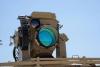 Israel's Iron Beam and the laser future of missile defense
 Scientists at the Harbin University of Science and Technology have pioneered a sophisticated...
 Researchers have developed a breakthrough "molecular jackhammer" technique...
 Human trials are underway for a drug that regrows human teeth in just 4 days.



European Conservative Lawmakers Warn Of 'No-Go Zones' Tied To Mass Immigration And Islamizat

The report was presented at a press conference on Wednesday by Sweden Democrats MEP Charlie Weimers, French nationalist MEP Marion Maréchal, and Brothers of Italy MEP Nicola Procaccini. Published by New Direction, the foundation tied to the ECR parliamentary group, the study argues that large parts of Europe are witnessing the rise of "parallel societies where the laws of the State are increasingly replaced by the codes of radicalisation and the rule of violence."
Maréchal said the findings showed the trend was no myth. "France has 751 sensitive areas and 1,362 priority neighborhoods. Our study demonstrates that no-go zones develop according to two factors: immigration and Islamization — 63 percent of Islamist terrorists are linked to these areas," she said at the launch event.
Procaccini described the document as "a wake-up call on the failures of uncontrolled immigration," a line that closely echoed the report's own foreword, which says Europe must confront "the failures of uncontrolled immigration, the lack of effective integration policies, and the abdication of responsibility by local governments." It adds that the publication is intended to be the first in an annual series.
The study sets out a scoring system built around crime and violence, the existence of parallel societies, and evidence of state withdrawal.
Using that framework, it examined 17 neighborhoods across seven EU countries, ranking France's Franc Moisin district at the top with a score of 10, followed by La Castellane in Marseille, Molenbeek in Brussels, and Rosengard in Malmö, each with scores of 9.4. Other districts highlighted include Neukölln in Berlin, Marxloh in Duisburg, Raval in Barcelona, and Schilderswijk in The Hague.
According to the report, these areas are marked by patterns such as elevated violent crime, youth gang activity, riots, unemployment, early school leaving, attacks on police or firefighters, and emergency-service delays or refusals. The authors argue that these factors together point to places where state control has weakened, and parallel authority structures have arisen.
The report also claims a strong correlation between no-go zones and the share of foreign-born and Muslim populations, arguing that the overrepresentation of both in the studied districts reflects broader demographic and cultural changes reshaping European cities.
It says the average Muslim share in the identified areas is 29 percent, compared with an EU-wide average of 4.9 percent, and argues that no-go zones are "highly correlated to mass immigration" and "highly correlated to Islam."
In its foreword, New Direction says the reluctance to use terms like "no-go zone" has created a divide between public debate and reality, and warns that Europe risks losing not only control of its streets but also "the very values of freedom and equality that define our civilization" if such areas continue to thrive.