










Breaking News
 We Bought 8.7 Acres for $14,000 - Now We Are Greening the Desert with Earth Smiles
 Dear America, We Do Not Beat China in the AI Race if We Become China in the AI Race
 Bot Farms, JD Vance, NATO, Charlie Kirk, Israel & the Globalist Propaganda Network Connecting It All
 The Number of Regular People Being Arrested for Protesting Data Centers Is Astounding
Top Tech News
 Idaho's High Desert Becomes Hot Spot For Nuclear Power Revolution
 The World's Largest Electric Aircraft Is About to Take Its First Flight
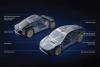 Tesla Cybercabs and Superchargers Will Act as Mini Cell Towers for SpaceX Starlink
 Elon Vows AI-Made 'Odyssey' After Blasting Nolan's Take On Homer
 Anthropic is launching its own drug discovery programs for rare diseases using Claude...
 SpaceX AI Satellites Will Have 250 Kilowatts of Power
 Chinese researchers have developed a sodium-metal battery that can fully charge in just 4 minutes...
 SpaceX Starship Flight 13 in 3 Days - Thursday July 13
 Chinese Scientists Develop Nuclear Battery Using Carbon-14
 Teleoperated humanoid robots complete first-ever live surgery



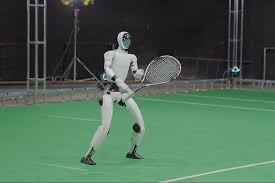
Watch: Humanoid robot gets surprisingly good at tennis
What does it take to be a decent sportsperson? Highly accurate perception, for a start – plus a lot of physical dexterity, excellent predictive abilities, fast reflex reactions, a sixth sense for angles, and no small amount of technique specific to the given sport.
The lattermost has been a challenge for robotics researchers; in tennis, as in most sports, wearable motion capture tech struggles to deal with how far tennis players run during a rally, and also can't yet read the tiny nuances of wrist angle and whatnot that separate a good shot from a bad one. It's far too dynamic a situation to make teleoperation an option.
And trying to divine this stuff from multi-camera TV footage using AI training software like nVidia's Vid2Player3D... Well, according to Zhang et al, authors of a new study, that's a "complex pipeline" that "may require substantial expertise and engineering efforts."
The team's new LATENT system goes back to motion capture, but only for the building blocks of technique, and it's designed to work with imperfect data. Effectively, in the current experiment, the researchers took some five hours' worth of motion capture data, in which human sportspeople demonstrated the "primitive skills" required for tennis: forehands, backhands, sideways shuffles and crossover steps, executed within a fraction of the area of a full-sized tennis court.
They crunched these motion captures to create a repertoire of human-like 'motion spaces,' then loaded these basic skills into the robots – in this case, Unitree's G1 humanoid, which you've seen all over the place doing everything from dance numbers to kickboxing, and which is now available from a pretty wild starting price of ~US$13,500.
Effectively, the LATENT system then more or less told the robots 'ok, there's how you should move. Now, using motions somewhat similar to those, your task is to see a tennis ball coming, and use your racket to hit it back over the net. Success is a ball landing on the opposite side of the court, within the white lines.'
With those basic skills and motions to choose from, the robots were then able to experiment with all the rest of the details; angles, timing, which movements to use for which purposes and when to move outside of the trained motions. The vast majority of this learning was done at greatly accelerated speed in simulation.
And the real-world results? Well, the G1 returned forehands at around 90% success and backhands at just under 80%, and looks remarkably agile and fluid and... An awful lot like a tennis player while doing it.
????Introducing LATENT: Learning Athletic Humanoid Tennis Skills from Imperfect Human Motion Data
— Zhikai Zhang (@Zhikai273) March 15, 2026
Dynamic movements, agile whole-body coordination, and rapid reactions. A step toward athletic humanoid sports skills.
Project: https://t.co/MFy2NIOsrn
Code: https://t.co/A7B5H8PIBh pic.twitter.com/vOnEzkCHXC