










Breaking News
 Sub-$300 mini camera drone flies 4K/60fps video and obstacle avoidance
 Yemen's Houthis escalate attacks on Israel as they are drawn into Iran war - with vital trade...
 Diabetes patients are CURED of disease with groundbreaking new treatment, study shows
 We're f*cked...
Top Tech News
 We Build and Test Microwave Blocking Panels - Invisible to Radar
 Man Successfully Designs mRNA Vaccine To Treat His Dog's Cancer
 Watch: Humanoid robot gets surprisingly good at tennis
 Low-cost hypersonic rocket engine takes flight for US Air Force
 Your WiFi Can See You. Here's How.
 Decentralizing Defense: A $96 Guided Rocket Just Put Precision Warfare into the Hands of the People
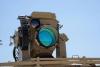 Israel's Iron Beam and the laser future of missile defense
 Scientists at the Harbin University of Science and Technology have pioneered a sophisticated...
 Researchers have developed a breakthrough "molecular jackhammer" technique...
 Human trials are underway for a drug that regrows human teeth in just 4 days.



Who Gets a Seat at the Multipolar Table?
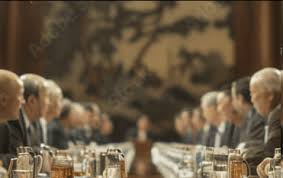
For decades, there was no table. There was only a throne. The United States sat alone at the head of the global order. Everyone else stood below – either as vassals secured by American protection or as enemies targeted by American power. There were no peers, only subjects and adversaries. But that hierarchy is crumbling. Look at the Philippines. For decades, a treaty ally, a strategic outpost in the American empire. Now, in light of developments in the Persian Gulf, Manila is in direct talks with Beijing to co-develop gas fields in the South China Sea. This isn't hedging. It's a recognition that the throne is, if not vacant, certainly vacillating. When a vassal starts negotiating with the hegemon's rival over disputed territory, it's not because the protection is "insufficient." It's because the hegemon can no longer fully enforce the hierarchy.
The lesson is being written in fire as we speak in the Gulf. The Gulf monarchies, all hosts to American forces, are being pummeled, not despite the bases, but because of them. US air defenses could not stop it all. The message was brutal: alignment with Washington doesn't always buy safety. It can buy a target. The security umbrella has holes. The guarantee is no longer valid. For now, the Gulf states are sticking with USA, but for how long?
So, who sits at the new table? The United States, China, and Russia are already seated. They have the nuclear arsenals, the economic mass, the global reach. They are poles by default, by history, by capability. But multipolarity demands more than three. It demands regional centers of gravity that can shape their neighborhoods without asking permission.
Enter Iran. Iran isn't asking for a seat. It is taking one. Through active war, it is proving the criteria. A pole isn't defined by GDP or population alone. It is also defined by will, resilience, and reach. Can you absorb a blow and strike back? Can you project power beyond your borders without a patron? Can you impose costs on a superpower that make escalation politically unsustainable? Iran, under direct attack, has done all three. It has kept its missile forces operational, activated proxy networks across the region, and triggered the largest global energy shock since the 1970s by closing the Strait of Hormuz. That is leverage. That is pole behavior. Iran looks likely to emerge from the chaos in the Gulf as the regional superpower. A compariuson can be made to Prussia in the 19th century – smaller population and economy, but its punching power meant it was a full player in the concert of European nations of the time.
And speaking of them, what of Europe? The UK, France, Germany, Italy – the EU as a whole? Europe is an economic titan, a regulatory superpower, a cultural beacon. But is it a pole? France has nuclear weapons and expeditionary ambitions, but it is overextended and domestically constrained. Germany has industrial might but remains a military lightweight, dependent on American security. The UK talks of "Global Britain" but lacks the resources to back the rhetoric. The EU can set standards for smartphones, but it cannot agree on a unified response to a war on its doorstep. Europe has wealth, but not unity; capability, but not will. It remains within the American orbit, even as that orbit weakens. Can we say it is a stakeholder, but not entirely a sovereign actor? If the need is a new USB connector, Europe is the first to get the call. But resolve a geopolitcal issue? Until and unless the current crop of leaders are replaced, Europe might get invited to the dinner, but they will only be allowed into the building through the servant's entrance.