










Breaking News
 'UNFAIR': Mamdani's city-run grocer plan SLAPPED with lawsuit
 Trump Says If Iran Had a Nuclear Weapon, He Would Have Politely Called the Supreme Leader...
 Tucker Carlson: We are on the brink of a world war that ends with the use of nuclear weapons
 Who is trying to destroy the United States and the world?
Top Tech News
 Freezable titanium plate keeps your cooler chilled way longer than ice packs
 Review: Affordable thermal device is made for discovering life outdoors
 AI Whistleblower Tells Tucker How AI Could Kill All Humans by 2040
 You Hate Flock? Well There's More...
 Will Spiking Diesel Prices Drive Autonomous Trucking?
 Chinese Concept Video Imagines the Future of Warfare
 OPTIMUS CONFIRMED: 15,000 Bots This Year -- Tesla to $3,000
 What is Going On With Robotaxi and Cybercab? Here Are All the Answers
 Floating data center would provide water and electricity to 32,000 homes
 OpenAI Cuts Off Elon's Cursor, Humanity's First Star Probe, and Trump's Nuclear Mars Shi



DLR Tests Hydrogen Fuel for Aviation at -253°C
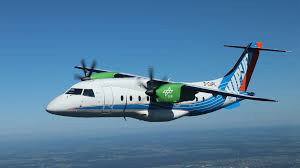
At its Future Propulsion Test Facility in Cologne, engineers conducted cryogenic tests in early 2026 to study how liquid hydrogen could be used as a fuel for aircraft.
These experiments pushed systems to around −253°C (−423°F), the temperature at which hydrogen becomes liquid and can be stored efficiently for aviation use.
The focus of these tests is one of the biggest challenges in hydrogen aviation: safely transporting super-cold liquid hydrogen from onboard tanks through fuel lines and into engines without leaks, material stress, or energy loss. Interestingly, some of the engineering concepts draw from **cryogenic fuel handling techniques already used in shipping and space industries**, showing how cross-industry innovation is helping accelerate progress.
Hydrogen offers significant potential as a zero-carbon aviation fuel at the point of use, but significant hurdles remain, including storage, infrastructure, and aircraft redesign.
Projects like this are part of a broader push across Europe to make hydrogen-powered flight viable in the coming decades.