










Breaking News
 Will China Retaliate Against Donald Trump's Oil Blockade and Force an American Surrender?
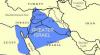 There can be no peace in the Middle East as long as the Zionist agenda of greater Israel rules
 Elon Musk Reveals Covid Vaccine Injury After Former Pfizer Official Admits Shots Likely Killed...
 Autonomous wing-in-ground effect aircraft has US military in its sights
Top Tech News
 The Most Dangerous Race on Earth Isn't Nuclear - It's Quantum.
 This Plasma Stove Cooks Hotter Than The Sun
 Energy storage breakthrough traps sunlight in a molecule
 Steel rebar may have met its match – in the form of wavy plastic
 Video: Semicircular wings give Cyclone VTOL a different kind of lift
 After 20 Years, Wave Energy Finally Works
 FCC Set To "Supercharge" Starlink Space Internet With "Seven-Fold More Capacity"
 'World's First' Humanoid Robot For Real Household Chores Launched With 16-Hour Battery
 XAI Training 10 Trillion Parameter Model – Likely Out in Mid 2026
 The $7 Powder That Beats Your $5,000 AC Unit!



Blast Them: A Rutgers Scientist Uses Lasers to Kill Weeds
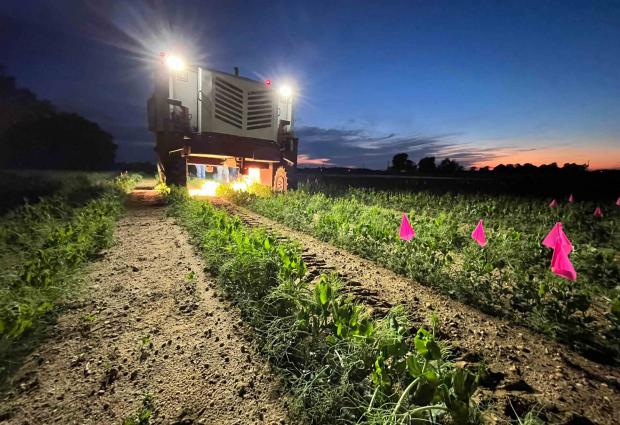
Imagine a tractor-size machine that can tell the difference between a vegetable and a weed – and then zaps the unwelcome plant with a laser.
It's not science fiction. It's being tested in New Jersey by Rutgers University scientist Thierry Besançon.
An associate professor with the Department of Plant Biology in the School of Environmental and Biological Sciences, Besançon recently collaborated on field trials of the high-tech device that uses artificial intelligence and lasers to kill weeds without using chemicals.
"It's pure physics," he said. "There's no herbicide involved. It's just light energy targeting the weeds."