










Breaking News
 An $11 TRILLION Systemic Risk is Coming in Late March
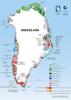 Beneath Greenland's vast ice sheet lies one of Earth's most ancient geological treasures:
 Remember the names of every Republican member of Congress who votes no today...
 The Price of Safety
Top Tech News
 Superheat Unveils the H1: A Revolutionary Bitcoin-Mining Water Heater at CES 2026
 World's most powerful hypergravity machine is 1,900X stronger than Earth
 New battery idea gets lots of power out of unusual sulfur chemistry
 Anti-Aging Drug Regrows Knee Cartilage in Major Breakthrough That Could End Knee Replacements
 Scientists say recent advances in Quantum Entanglement...
 Solid-State Batteries Are In 'Trailblazer' Mode. What's Holding Them Up?
 US Farmers Began Using Chemical Fertilizer After WW2. Comfrey Is a Natural Super Fertilizer
 Kawasaki's four-legged robot-horse vehicle is going into production
 The First Production All-Solid-State Battery Is Here, And It Promises 5-Minute Charging
 Storage doesn't get much cheaper than this


Beneath Greenland's vast ice sheet lies one of Earth's most ancient geological treasures:
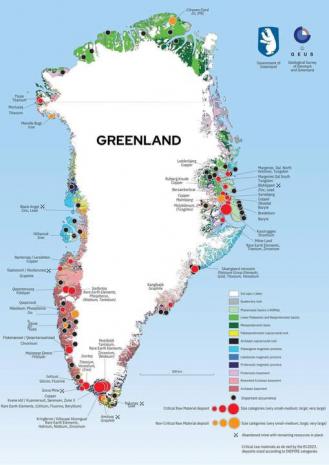
Beneath Greenland's vast ice sheet lies one of Earth's most ancient geological treasures: a bedrock archive stretching back more than 3.8 billion years, rich in critical and strategic minerals that are increasingly vital to modern technology and the global energy transition.
This immense island, part of the ancient North Atlantic Craton, preserves some of the planet's oldest continental crust, shaped by billions of years of tectonic processes, volcanic activity, and rifting. Embedded within these rocks are significant concentrations of rare earth elements (REEs) such as neodymium and dysprosium—key components in permanent magnets for electric vehicle motors, wind turbine generators, and consumer electronics like smartphones.
Beyond REEs, Greenland hosts a diverse array of valuable deposits, including:
• Gold, platinum-group metals, and zinc
• Iron ore in ancient banded iron formations
• Lithium, tantalum, and niobium in pegmatites
• Diamonds in kimberlite pipes
• Uranium (though mining has faced restrictions due to environmental and regulatory concerns)
Southern Greenland stands out particularly, with the Gardar Province featuring unique alkaline intrusions and carbonatite complexes that naturally enrich these elements. Sites like Kvanefjeld (Kuannersuit) and Tanbreez are among the world's largest known REE deposits, while carbonatites such as Sarfartôq and others contribute to the island's potential for high-grade concentrations of critical minerals.
These resources are not merely prospective; extensive geological mapping by organizations like the Geological Survey of Denmark and Greenland (GEUS) has identified and quantified many of them, with some projects advancing toward exploitation. Greenland contains 25 of the EU's 34 designated critical raw materials, positioning it as a potential non-Chinese source amid rising global demand for low-carbon technologies.
Exploitation, however, remains fraught with challenges. Harsh Arctic conditions, limited infrastructure, environmental risks from melting ice and potential contamination, Indigenous Inuit rights, and strict regulations (including a 2021 ban on uranium mining that stalled projects like Kuannersuit) complicate development.